
You push a minor hotfix to production on a Thursday afternoon, and Google Play rejects the build within forty minutes. A third-party analytics SDK targeted an obsolete permission level that you did not know existed.
Your sprint stops immediately. Two senior engineers abandon their feature roadmap to debug build scripts while customer support handles negative app reviews.
Keeping mobile applications running requires deliberate operational ownership, not casual bug fixing between product milestones. Production software drifts continuously against store policies, toolchains, and operating systems. Unaddressed platform warnings eventually paralyze standard release pipelines. This guide details how technical leaders run reliable mobile maintenance without burning sprint capacity or risking sudden store removal.
Reading time: 14 min
Key points
- Store policy drift rather than your own code is often what breaks releases: Google mandates new target API levels every summer, and Apple requires updated privacy manifests and SDK signatures.
- Two objective escalation thresholds: a crash-free user rate below 99.5% and an Android ANR rate above 0.4%.
- Pre-flight build checks sixty days before store enforcement dates surface deprecated methods while your team still has time to refactor safely.
- Ticket-based maintenance rewards recurring fixes; embedded engineering ownership eliminates root causes.
Table of contents
Mobile app maintenance is a production ownership function
Mobile app maintenance services are not post-launch cleanup. They represent an operating model that keeps a production system stable, compliant, and shippable while external platforms change underneath your code.
Many startups celebrate launch day and disband the project team. Six months later, an unaddressed platform deprecation blocks critical customer updates when an unexpected production bug strikes.
Preventing that failure mode requires shifting from a project mindset to active product operations. Someone must act as a dedicated Release Manager who owns crash triage, store compliance, and ongoing maintenance every week.
Production systems demand ongoing operational attention rather than sporadic developer intervention. According to the Linux Foundation’s 2025 tech talent report, software development positions showed a net hiring effect of +24% during 2024 as companies protected specialized technical capacity. Without clear production ownership, mobile apps slowly decay into release paralysis.
Where teams confuse app support with maintenance
Customer support and software engineering solve two distinct operational problems. Support handles ticket intake, triage queues, and user communications when transactions fail. Maintenance inspects the codebase, writes regression tests, and ships root-cause fixes that prevent future failures.
Teams that rely entirely on post-launch app support find themselves trapped in an endless cycle. Support technicians resolve individual complaints with manual database adjustments or device restarts, but the flawed code remains in production.
App support manages user sentiment, while genuine maintenance changes technical outcomes. When you invest solely in ticket response, your defect backlog grows alongside your customer frustration.
Engineering maintenance produces durable artifacts including automated regression suites, architecture documentation, and clean release notes. These deliverables steadily reduce incident frequency instead of merely managing customer pain. Treating technical maintenance as customer service ensures that recurring bugs survive across every quarter.
The minimum scope a serious maintenance service must cover
A credible engineering agreement extends far beyond cosmetic defect resolution. Basic on-demand bug fixing ignores platform health until Apple or Google removes your binary from circulation.
Effective ongoing app maintenance must encompass platform compatibility updates and store compliance verification alongside telemetry monitoring and security patching. Your engineers must track impending iOS and Android operating system releases months before public distribution.
They must also manage third-party software development kits, privacy manifest disclosures, and push notification tokens. These technical requirements shift continuously beneath active production deployments. Neglecting background data privacy forms will trigger automated store rejections during routine point releases.
Operational routines should generate weekly triage notes, live crash dashboards, and verified staging builds before any production rollout. If your current provider only responds when an end user complains, your compliance posture is already compromised. True maintenance shields your engineering roadmap from unexpected distribution emergencies.
The week a store deadline lands in your inbox
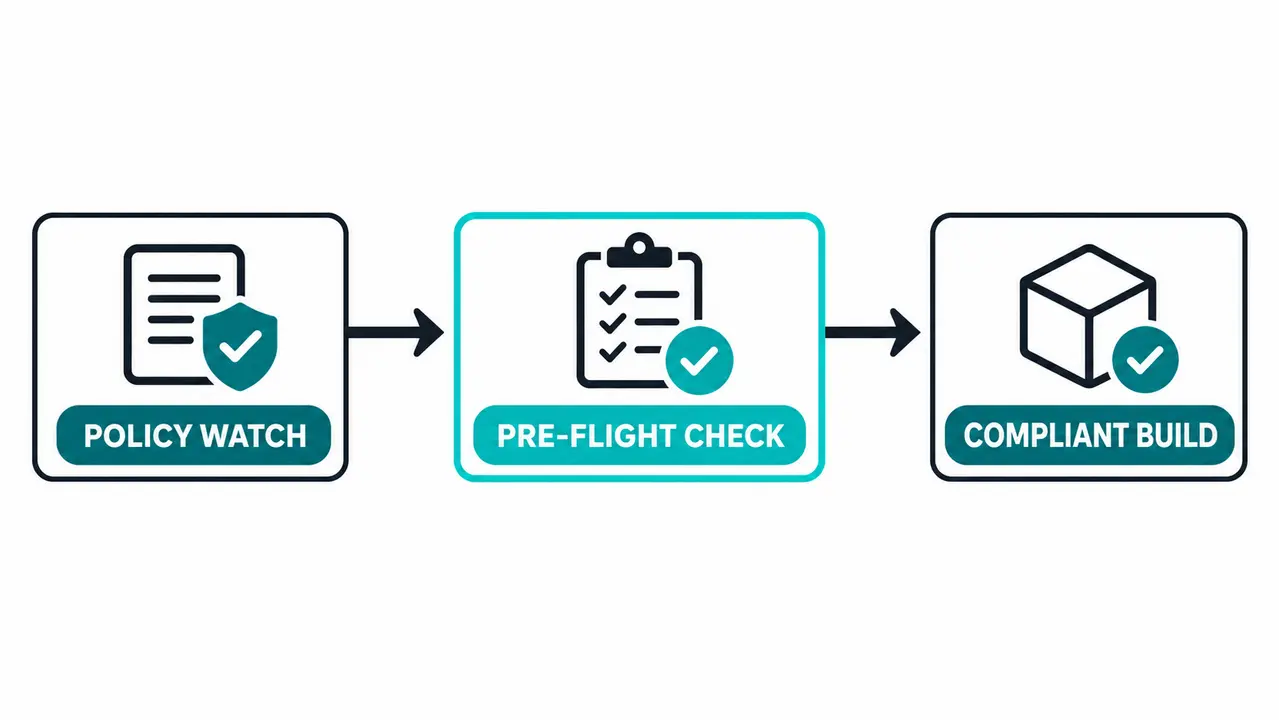
Store policy updates arrive on unforgiving calendars established by platform operators. Every summer, Google mandates new target API levels, while Apple requires updated privacy manifests and SDK signatures.
Treating these notifications as unexpected interruptions creates chaos across your product team. Developers rush to update dependencies forty-eight hours before the cutoff date, breaking production builds and compromising quality assurance.
Maintaining continuous compliance with the App Store and Google Play requires an active policy watch schedule. Our teams monitor developer policy bulletins quarterly to map mandatory platform migrations against current sprint goals.
We run pre-flight build checks sixty days before enforcement dates using a formal release readiness checklist. This proactive window reveals deprecated methods and broken native wrappers while your team still has time to refactor safely. Engineering teams update compiler settings and test third-party plugins in isolation. Compliance belongs on your release calendar, not in an urgent emergency ticket.
Updates and fixes need a triage system that engineering trusts
An unprioritized defect queue destroys engineering productivity. Without an objective framework, developers waste valuable sprint hours resolving minor visual flaws reported by vocal executives while critical functional defects destroy customer retention.
Systematic app updates and bug fixes demand an engineering rubric based on quantifiable user impact. We weigh issue severity against affected cohort size, customer revenue exposure, and estimated time-to-fix.
Disciplined engineering teams anchor their weekly triage sessions to production telemetry benchmarks. A crash-free user rate dropping below 99.5% or an Android ANR rate exceeding 0.4% triggers immediate operational escalation.
Classifying updates and fixes through hard data prevents emotional prioritization. Senior developers focus their attention on high-impact crash clusters, preserving core user journeys and protecting app store ratings. Clear triage criteria eliminate friction between product owners and delivery engineers. When reproduction steps remain unverified, the ticket drops down the backlog until proper telemetry arrives.
Crash monitoring without ownership is just noise
Installing Sentry or Firebase Crashlytics takes fifteen minutes. Reviewing thousands of unassigned exception logs accomplishes nothing if no engineer owns remediation.
Effective app monitoring and incident response requires clear operational ownership of the error stream. Our engineers run a structured weekly review process to analyze top crash clusters, examine stack traces, and write reproduction steps.
Each verified defect receives a dedicated technical owner, a regression test, and a scheduled patch milestone. This rigorous cadence prevents recurring errors across subsequent app releases.
Unmonitored code decays in public view.
Even an early-stage MVP with low transaction volume requires basic crash capture. Early users rarely submit support tickets when an application crashes silently during account registration. Without telemetry ownership, you lose prospective customers and never understand why they abandoned your product. A named engineer must inspect exception reports every week to maintain production stability.
Keeping iOS and Android builds shippable across toolchain changes
Mobile development toolchains evolve aggressively every quarter. Apple routinely deprecates older Xcode versions for App Store submissions, while Android Gradle plugin upgrades demand recent Java runtime environments.
A broken pipeline halts all business.
When teams neglect build infrastructure, emergency hotfixes become impossible to compile. We frequently audit client repositories where a simple single-line bug fix requires two weeks of build pipeline repairs because nobody upgraded the toolchain for twelve months.
Sustainable OS compatibility updates demand constant attention to continuous integration scripts, code signing assets, and distribution certificates. We keep automated Fastlane scripts and GitHub Actions runners aligned with upstream operating system requirements.
Updating dependencies incrementally isolates compiler deprecations before they compound into major engineering blockers. Proactive validation ensures development teams never lose the capacity to distribute critical hotfixes. Your release pipeline must remain green continuously so critical patches ship within hours rather than weeks.
Third-party SDK drift is the silent maintenance backlog
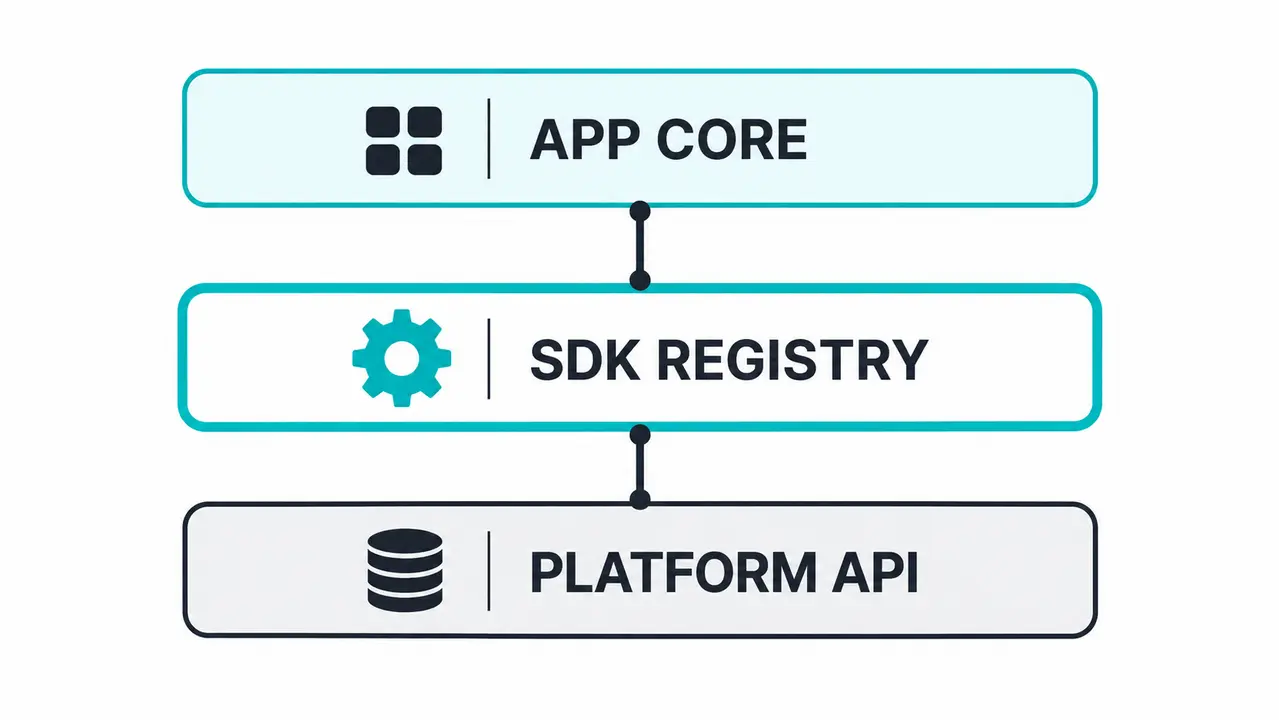
Modern mobile applications rely heavily on external software libraries to handle user authentication, mobile analytics, payment processing and remote push notifications. Each third-party dependency introduces an unmanaged failure domain into your production binary.
Vendors regularly sunset backend endpoints, change native permission models, or modify background thread handling. If your team ignores library maintenance, a silent vendor deprecation can disable payment flows overnight without any change to your proprietary code.
Preventing unexpected production outages requires maintaining a comprehensive dependency inventory with a predictable update cadence. We track version lifecycles for critical integrations like Stripe, Segment, and Firebase across every production release.
Testing library upgrades in dedicated staging environments uncovers runtime conflicts before real customers encounter them. Teams that postpone SDK maintenance eventually face emergency upgrades under production pressure, which introduces regressions and compromises quality assurance. Routine dependency management transforms high-risk third-party migrations into predictable background work.
Security patching is not a quarterly event
Treating software security as a periodic compliance checkbox leaves applications exposed to active exploitation. Automated vulnerability scanners identify flaws in open-source mobile packages daily, and attackers target publicly documented exploits within hours of disclosure.
Mobile security requires continuous operational hygiene rather than quarterly panic. Engineering teams must run automated dependency vulnerability scanning on every pull request to identify compromised libraries before code enters the main branch.
Production maintenance also involves securing client credentials, enforcing certificate pinning, and rotating application programming interface keys. Proper key rotation procedures and access governance align with established information security frameworks like ISO/IEC 27001:2022 to verify baseline protection standards.
Hardening network contracts against mobile reverse engineering prevents malicious actors from extracting sensitive data from decompiled application packages. Leaving known vulnerable libraries inside production binaries invalidates enterprise compliance and exposes customer credentials to extraction. Shipping regular security patches alongside routine application updates maintains a defensible posture against evolving platform threats.
Release management that prevents maintenance from breaking production
Shipping a bug fix that causes a catastrophic regression is the fastest way to lose customer trust. Quick patches deployed under pressure frequently introduce secondary defects when teams bypass standard release controls.
Disciplined release management for mobile apps demands identical testing rigor for maintenance builds and major product milestones. We use structured release checklists that mandate static code analysis, unit verification, and end-to-end regression passes before binary submission.
Production deployment must occur through phased rollouts rather than immediate universal distribution. We distribute builds to internal testing groups, proceed to a five percent canary release, and monitor telemetry closely.
Using remote feature flags allows engineering leads to disable unstable code paths instantly without waiting for app store review approval. A four-hour post-release monitoring window means crash spikes trigger immediate rollout suspension before broad user impact occurs. Disciplined release management transforms reactive hotfixing into a controlled, predictable delivery mechanism.
Ongoing maintenance for cross-platform stacks without upgrade paralysis
Cross-platform frameworks like React Native and Flutter accelerate initial delivery, but they introduce intricate dependency layers. Your codebase depends on framework bridges, third-party native wrappers, and platform compilation targets simultaneously.
Postponing framework updates for eighteen months produces upgrade paralysis. Jumping multiple major versions breaks custom bridge code, deprecates native UI components, and turns what should be an upgrade into an agonizing rewrite.
We manage this complexity through scheduled incremental updates and dedicated upgrade sprints. Maintaining an automated smoke test suite across both operating systems validates native bindings whenever core dependencies change. A clear compatibility matrix identifies which community packages require replacement before beginning the framework version upgrade.
Occasionally, inherited codebases drift so far behind current framework architectures that incremental patching becomes economically irrational. If an application relies on obsolete bridge libraries that lack modern 64-bit architecture support, rebuilding core modules often proves faster than resolving hundreds of conflicting dependencies.
Taking over an existing app starts with an audit, not a promise
Taking responsibility for an unfamiliar codebase without a technical inspection is an invitation to disaster. Vendors that promise immediate service level guarantees without examining the underlying repository inevitably miss deadlines when production issues emerge.
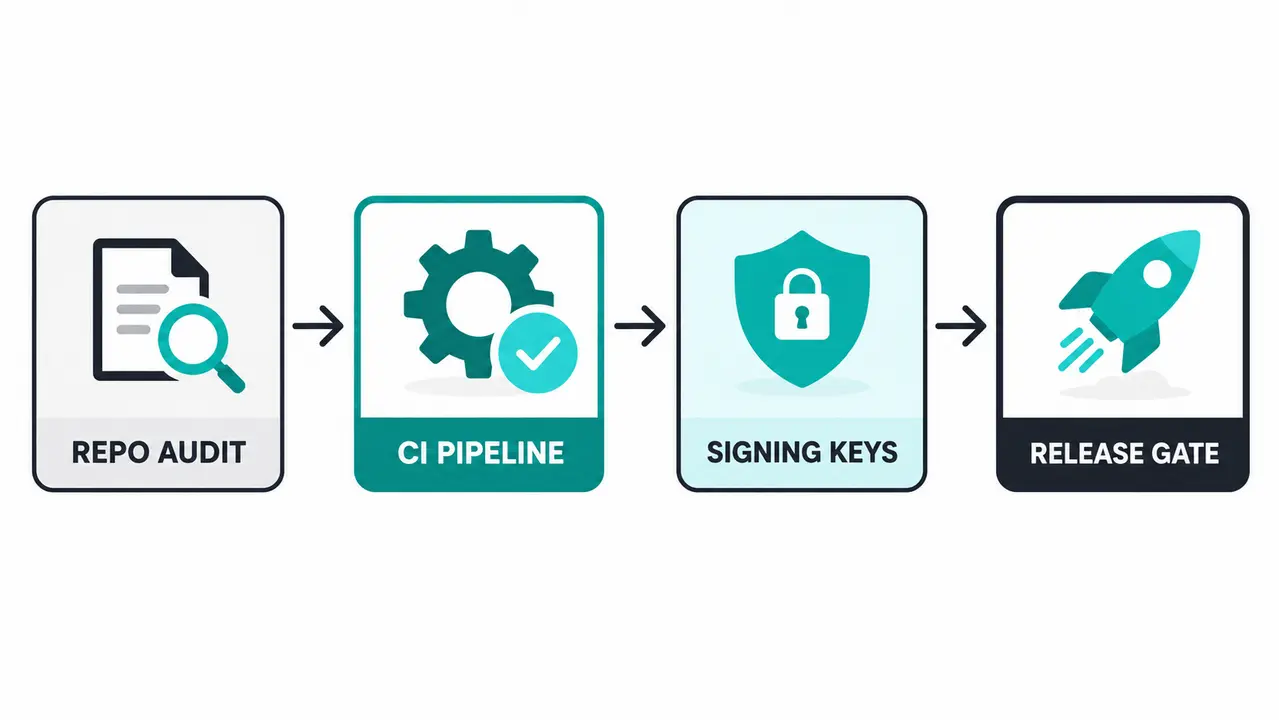
A professional engineering takeover begins with an exhaustive repository audit. At Sentice, our engineers review source control history and continuous integration configurations alongside distribution certificates and crash telemetry dashboards before assuming release authority.
This technical evaluation uncovers undocumented dependencies, hardcoded credentials, and missing build scripts that could paralyze emergency releases. Identifying hidden technical debt early allows both teams to establish realistic remediation priorities.
Our structured takeover audit checklist establishes whether the existing build pipeline compiles cleanly on standard developer workstations. We inspect automated test suites to gauge regression coverage across critical user flows. We confirm access to developer portal accounts and check code signing keys before we sign a maintenance service agreement. Validating infrastructure upfront prevents embarrassing deployment failures during your first production emergency.
The documents that make maintenance predictable
Tribal knowledge represents a critical operational risk for production applications. When a single developer holds the exclusive understanding of provisioning profiles and release scripts, your delivery pipeline halts whenever that individual takes vacation or leaves the organization.
Predictable maintenance requires lightweight, living documentation that any qualified software engineer can execute. We produce detailed release runbooks that outline distribution steps, provisioning certificate renewals, and roll-forward mitigation procedures.
At Sentice, our delivery teams maintain an architectural component diagram and an active dependency inventory within your team knowledge base. These documents detail communication protocols, external integration touchpoints, and environment configuration flags.
Standardized release checklists convert complex deployment procedures into repeatable technical routines. Living documentation removes ambiguity during high-stress outages and keeps institutional knowledge inside your company. Clear runbooks enable any team member to execute emergency builds confidently. Documented engineering processes ensure smooth collaboration across distributed teams and prevent avoidable deployment errors.
How the three engagement models compare
Selecting the appropriate operating model determines whether maintenance protects your product or drains engineering management capacity. Organizations choose between ticket-based support, capacity-based embedded engineers, and fully managed maintenance services depending on their internal technical capabilities.
The following table compares the operational ownership, release authority, and escalation paths across these three maintenance structures.
| Model | Release Ownership | Escalation Path | Prevention Focus |
|---|---|---|---|
| Ticket-based | Client engineering team | Helpdesk ticketing queue | Low |
| Capacity-based | Shared team governance | Direct engineering lead | High |
| Fully managed | Vendor release manager | Dedicated on-call rotation | High |
Ticket-based maintenance is a structural trap.
Hourly ticketing incentivizes vendors to bill for recurring fixes rather than eliminating root causes. When platform churn accelerates, reactive hours consume budgets while core reliability metrics deteriorate.
Generic dev shops sell reactive hours, while embedded teams take ownership of release stability. Engaging dedicated software engineering teams aligns technical incentives around long-term stability. Embedded engineers integrate directly into your delivery rituals, taking full responsibility for code health and release pipelines. This shared ownership model ensures developers eliminate technical debt before it compromises product velocity.
Make maintenance someone’s actual job
A short conversation with our engineers will show you what active maintenance ownership looks like for your stack, your stores and your release calendar.
What to require in an SLA without turning it into theater
Most enterprise service level agreements provide legal comfort while offering zero operational value during an actual production outage. A contract that promises thirty-minute response times is useless if external engineers lack repository write access and store deployment keys.
A practical agreement defines realistic severity classifications paired with distinct response and restore targets. Critical severity must be reserved for widespread application crashes or payment gateway outages that halt core business transactions.
Agreements should define clear operational boundaries between standard business hours and round-the-clock emergency escalation. Demanding twenty-four-hour coverage without funding dedicated on-call rotations produces exhausted engineers who introduce regressions during midnight hotfixes.
Every major incident must conclude with an actionable post-mortem report using a standardized incident template. The document identifies the underlying trigger, containment timeline, and preventative code changes required. Engineering managers review these findings during sprint retrospectives to update regression test suites. SLAs succeed only when backed by continuous deployment access and proven release readiness.
Maintenance reporting that a CTO will actually read
Executive leaders do not have time to read twenty-page activity logs filled with ticket identifiers. Status reports that merely list completed tasks fail to demonstrate whether production risk is increasing or decreasing over time.
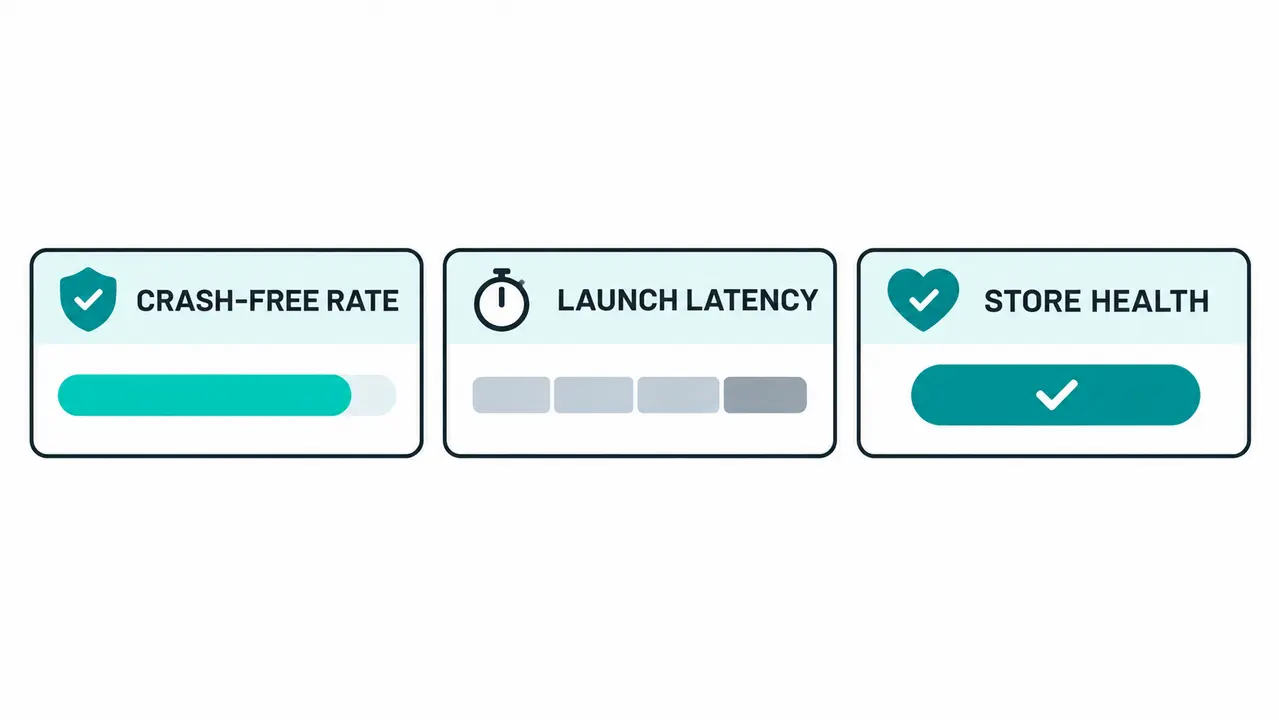
Effective engineering reporting is metric-led, concise, and focused on business outcomes. Our reporting framework isolates top incident root causes, tracks active crash clusters, and summarizes store compliance health on a single page.
A high-signal report highlights measurable reliability indicators including crash-free session rates, cold launch latency, and mean time to recovery. It shows engineering leadership exactly how maintenance investments protect user retention.
Every summary concludes with a dedicated decision section outlining technical trade-offs that require executive approval. When technology leaders must decide whether to retire legacy operating system support or approve third-party library replacements, clear reporting equips them to act quickly. Actionable reports communicate technical reality clearly without burying strategic choices beneath developer jargon.
Recognizing when maintenance is no longer enough
Brittle foundations eventually demand replacement.
There comes a threshold where ongoing patching cannot overcome architectural decay. Pouring maintenance hours into a fundamentally flawed foundation wastes capital while frustrating both developers and users.
Warning indicators appear when routine updates trigger repeated regressions across unrelated features. If upgrading your core compilation toolchain requires months of custom wrapper modifications, your architecture has reached its structural limit.
Maintenance-only contracts fail when underlying architectural debt blocks necessary business features. Band-aid fixes become more expensive than intentional re-engineering. Continuing to apply tactical bug fixes under these conditions merely delays an inevitable collapse.
When your application hits this performance ceiling, engineering leaders must shift from routine upkeep to focused product development. A deliberate stabilization initiative or a modular refactoring plan establishes measurable exit criteria to rebuild brittle subsystems. Recognizing this transition preserves engineering velocity before technical debt paralyzes your entire product organization.
Frequently asked questions
How often should a production mobile app be updated?
Most commercial applications maintain a bi-weekly or monthly release cadence for standard bug fixes and dependency updates. Critical security vulnerabilities or fatal launch crashes require immediate hotfix deployments outside the routine cycle. A consistent schedule maintains store visibility while keeping platform deprecations manageable.
Can a vendor maintain an app they did not build?
Experienced engineering partners routinely assume ownership of existing codebases through structured onboarding audits. The intake process assesses architectural health, validates build scripts, and identifies dependency risks before active maintenance begins. Teams require comprehensive repository access and deployment credentials to establish production ownership safely.
What should we hand over on day one to avoid delays?
Ensure your team provides administrative access to source code repositories, continuous integration pipelines, and mobile developer portal accounts. You should also supply distribution signing certificates, crash reporting dashboards, and environment configuration profiles. Missing credentials or undocumented deployment steps create significant delays during production emergencies.
What is included in ongoing maintenance versus new feature development?
Maintenance covers operating system compatibility and dependency upgrades, along with store compliance adjustments and defect resolution. New feature development involves scoping and building novel business capabilities that alter core product workflows. Keeping these budgets distinct prevents routine technical upkeep from consuming sprint resources allocated to product growth.
What metrics best indicate maintenance health over time?
Monitor your crash-free user percentage and store listing ratings, along with cold launch latency and mean time to resolution for production defects. A healthy application maintains a crash-free session rate above 99.5% and low ANR percentages on Android devices. Sustained degradation across these indicators signals underlying code decay.
Next steps for a maintenance takeover that does not stall delivery
A successful maintenance transition begins with a structured two-week audit that verifies repository health, build pipelines, and production telemetry before committing to delivery schedules. Agree on an objective triage rubric and establish an incremental release schedule before engineers write their first hotfix. Treat the initial month as an operational stabilization phase focused on burning down distribution risk rather than forcing feature velocity. For further technical analysis on engineering governance and delivery operations, explore the Sentice blog as your team prepares its release framework.
Start your takeover with an audit, not a promise
We review your repository, pipelines and telemetry before anyone commits to a deadline, so the first production emergency never surprises either side.
About Sentice

Sentice is a boutique software engineering partner founded in 2013 by Roni Levi and Martin Petkovic, now headquartered in Skopje, North Macedonia. Rather than supplying individual developers, we build embedded teams that blend with a client’s culture, tech stack and goals, working together from a single office under our own technical leadership. We deliver dedicated software engineering teams, end-to-end software solutions, product development, and system and embedded engineering, and we act as technical advisors across the full development lifecycle, from specification and architecture through development, testing and support. We use AI coding tools across every project, and we help clients integrate AI into their own products through chatbots, MCP services, connected application layers and workflow automation. Some of the clients we started with more than a decade ago are still building with us today.
Email: info@sentice.com | Phone: +389 70 307 837