
Your senior firmware engineer resigns on a Tuesday, three weeks into a platform migration, and the first thing that dies is not the roadmap. It is the decision trail. Nobody remembers why the bootloader was pinned to that specific toolchain version. The JTAG test fixtures work for one person. The release checklist lives in his head and in a Slack thread from March that nobody can find. Within a month the migration slips, leadership adds a second architect to “help,” and the second architect also starts interviewing. This is what churn actually looks like from inside an engineering organization. It is not an HR event. It is a systems failure that announces itself weeks in advance through delivery friction, if anyone is reading the signals. Below, we’ll walk through the signals worth watching, the practices that keep senior engineers engaged, and when an embedded partner reduces churn risk instead of adding to it.
Reading time: 12 min
Key points
- Churn announces itself weeks in advance through delivery friction: PR aging, build stability, and on-call load per engineer.
- High performers stay for autonomy, visible impact, and a credible growth path, not primarily for salary.
- Perks do not offset broken engineering fundamentals; closing one operational pain per quarter builds more retention capital.
- Operational metrics predict churn earlier than engagement surveys, and stay interviews only work when a written follow-up follows.
Table of contents
The retention problem starts as an engineering throughput problem
Effective developer retention strategies treat churn as a systems issue that shows up first in delivery friction, not as a morale problem you solve with a survey. Before anyone resigns, the evidence accumulates in your own tooling. Pull request aging creeps from hours to days. The main branch breaks more often. One or two engineers absorb the entire on-call burden because they are the only ones who can debug the flaky test harness.
Run a weekly delivery review that covers three signals: PR aging, build stability, and on-call load per engineer. Fifteen minutes, one dashboard, no ceremony. We have never seen a surprise resignation on a team where those three numbers were watched, because the resignation was preceded by weeks of visible friction that somebody eventually fixed, or ignored.
Review queues, unclear priorities, and relentless incident paging create frustration that compounds daily. The engineer does not quit over any single incident. They quit over eighteen months of incidents nobody addressed.
The week a senior leaves mid-migration
The most damaging attrition is not the highest salary exit. It is context loss during a risky transition, exactly when a platform migration or a hardware revision concentrates knowledge in one or two heads.
Protect yourself with three artifacts, created before you need them. A migration decision record that captures why each major choice was made, in writing, at the time. Interface contracts between subsystems so the boundary survives the people who drew it. A named backup owner for each subsystem, someone who has actually merged a change to it in the last quarter, not a name on an org chart.
When these do not exist, the spiral is predictable. The team slows down because every change requires archaeology. Leadership reads the slowdown as an effort problem and adds pressure. The pressure lands on the remaining seniors, who were already covering the gap. The second resignation follows within a quarter, and now you have a rebuild, not a migration.
What high performers actually optimize for
Strong engineers stay where they can do high-quality work with autonomy, visible impact, and a growth path they believe. Counterintuitively, salary rarely shows up first in their exit conversation. What shows up is “I have not shipped anything I am proud of in eight months.”
Give that clarity in writing. Build a quarterly role expectations document for your senior and staff levels that defines scope: what subsystems they own, what decisions they are the final reviewer on, what impact means at their level. Titles without scope definitions drift, and drifting roles get shopped externally.
One caution on keeping developers motivated through novelty. Some excellent engineers optimize for stability and mastery of a domain, not constant new tooling. Pushing a Kubernetes migration on a person who genuinely loves polishing a validation suite is how you lose them. Ask which kind of engineer you have before assuming.
Where retention efforts fail because they target perks
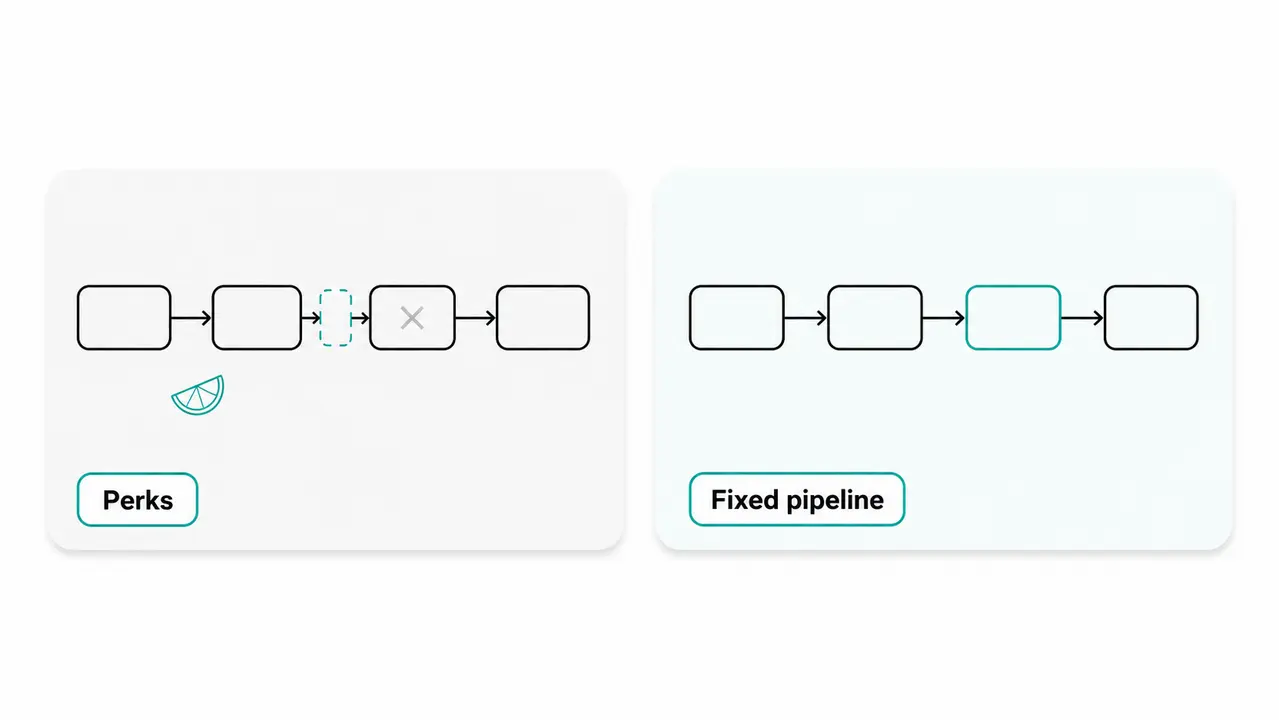
Free lunch does not offset a forty-minute CI pipeline. Retention programs fail when they compensate for broken engineering fundamentals instead of fixing them, and engineers read the compensation attempt as evidence that leadership knows and has chosen not to act.
Pick one operational pain each quarter and close it end-to-end, with a before-and-after metric the team can see. Flaky integration tests going from 14 percent failure rate to under 1 percent. Environment setup dropping from two days to two hours. One closed pain builds more retention capital than a year of hack days.
The trust failure is specific and avoidable. Offering a pizza hack day while the main branch has been red for three weeks tells the team you are decorating around the problem. They will take the pizza. They will also update their LinkedIn profile that evening.
Technical debt that turns every change into a negotiation
Technical debt drives churn when every improvement requires an argument. The engineer proposes a refactor, the product owner asks why it cannot wait, the engineer loses the negotiation, and the pattern repeats until the engineer stops proposing. That silence is the pre-resignation signal most teams miss.
Create a debt register with a severity rating for each item, a lightweight refactor RFC template so proposals arrive in a comparable form, and sprint capacity allocated to debt that leadership protects rather than lends. For security-related debt, use the OWASP Top 10 categories as a shared severity baseline so an injection risk is never argued down to “cleanup.”
Treating debt as a product risk changes the senior engineer’s daily experience. They stop feeling like permanent custodians of yesterday’s shortcuts and start shipping on a foundation that improves instead of decays.
Slow code review is a churn multiplier
Long review queues drain momentum in a way that is invisible in every productivity dashboard and obvious in every one-on-one. A tight review loop is a retention lever because it protects flow, and flow is where engineers experience mastery.
Set explicit PR age targets by risk level. Small changes reviewed the same day. Medium changes within two business days. Large or architecturally sensitive changes scheduled, with a named reviewer and a date, rather than floating in the queue until someone volunteers. Publish the actual numbers monthly. The gap between target and reality is your improvement backlog.
If review latency stays chronic, engineers conclude the system is the blocker. Nobody fights a queue forever. They leave for a team where the tooling and the norms respect their time, and your review debt becomes your hiring budget.
On-call load that never returns to baseline
Engineers quit when incident response becomes the job. A healthy on-call rotation is bounded and produces learning. A broken one produces pages, apologies, and a slow bleed of your most capable people, because the most capable people are the ones the system leans on.
Build the playbook with three components. An error budget per service so there is an agreed threshold that triggers real work. Runbooks for the top recurring alerts, written during the incident while the context is fresh. A reliability backlog that is scheduled like feature work, not aspirational.
The anti-pattern to prevent is paging volume that rises while postmortems become performative. If the same class of issue pages you three quarters in a row, the postmortem process has become theater. Engineers notice. The ones who notice hardest are the ones you can least afford to lose.
Career growth that is real without forcing management
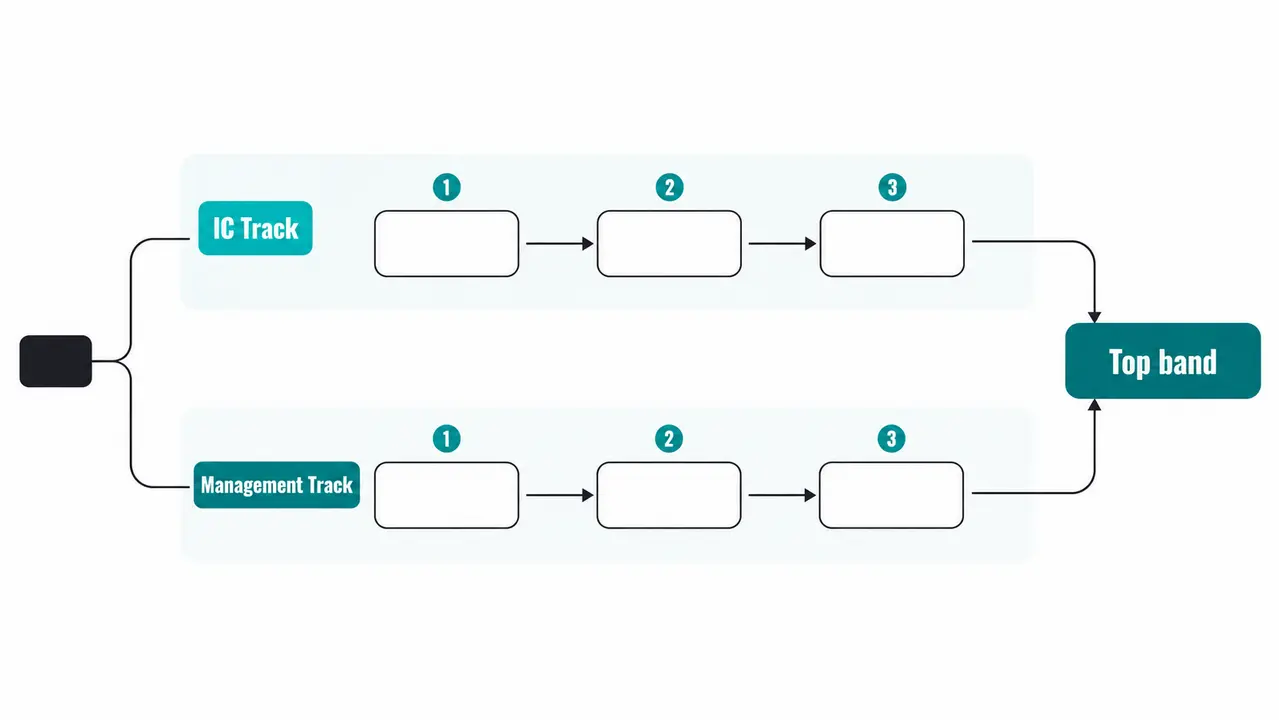
Retention improves when senior engineers can grow in scope and influence without being pushed into people management. The forced management track loses you two engineers for every promotion: one bad manager and one person who left rather than become one.
Use a competency matrix with a twice-yearly calibration, and ground it in evidence rather than impressions. Design docs authored, incident writeups completed, mentoring outcomes, cross-team decisions influenced. The matrix should make the individual contributor path as demanding and as rewarded as the management path, which means writing it that way and paying it that way.
Recognize deep specialists as first-class. An engineer who is exceptional at real-time constraints, safety practices, or performance work should be able to reach your top technical band without ever owning a roadmap. Otherwise you are training your best people to interview for titles elsewhere.
The management layer that protects engineers from thrash
Developers stay when managers create clarity, protect focus, and remove blockers. The verb matters. A manager who forwards every stakeholder request downstream is a router, not a filter, and routers are why teams thrash.
Run a weekly risk review with product and engineering where the standing agenda is scope re-trading. When a new requirement lands, something else leaves the sprint. That single rule, enforced consistently, does more for team stability than any team-building exercise.
The concrete case is the late hardware change request. A manager who accepts “small revision to the firmware interface” two weeks before a release forces a chaotic rewrite across three subsystems. A manager who negotiates it into a staged release, with the interface change isolated and the calibration work moved to the next cycle, has just retained two engineers and a deadline.
Hiring for retention starts with expectation design
Retention begins before day one. Engineers churn early when the role they were hired into differs from the role described in the interview, and the discrepancy is usually unintentional, which makes it no less expensive.
Give candidates a written “how we build software here” document before the final round. Walk them through an actual sprint board, with the real tickets, the real WIP limits, and the real on-call schedule visible. If the role involves compliance testing or six weeks of hardware bring-up work, say so while they can still say no.
The exit you are preventing sounds like this: “This is not what I signed up for,” said in month five, after the signing bonus has vested and the replacement search has started. Aligning hiring with delivery standards is also the fastest lever for Scaling up tech teams quickly without compromising quality, because a truthful pipeline beats a fast one that leaks.
Onboarding that makes a new engineer productive in 30 days
Good onboarding prevents the early helplessness that makes strong hires disengage. A capable engineer who cannot ship for six weeks starts wondering whether they are the problem, and by the time the answer arrives they have already updated their assumptions about your company.
Structure the first 30 days deliberately. An environment setup checklist that someone verifies still works monthly. An architecture tour covering the subsystem boundaries and their owners. A first paired PR in week one. A defined starter slice that touches tests and deployment, so the new hire experiences your full pipeline before touching anything risky. First merged PR inside two weeks is a reasonable bar.
Ultra-senior hires need less of the tutorial and more of the map. Domain context, stakeholder relationships, which meetings matter, who decides what. Skipping that mapping is why the impressive hire from a big company is still ineffective in month four.
Documentation that engineers trust under pressure
Documentation retains talent when it reduces dependence on tribal knowledge and makes ownership transferable. The document nobody trusts under pressure is a liability, because at two in the morning during an incident, the engineer paged is making decisions on whatever they believe the system does.
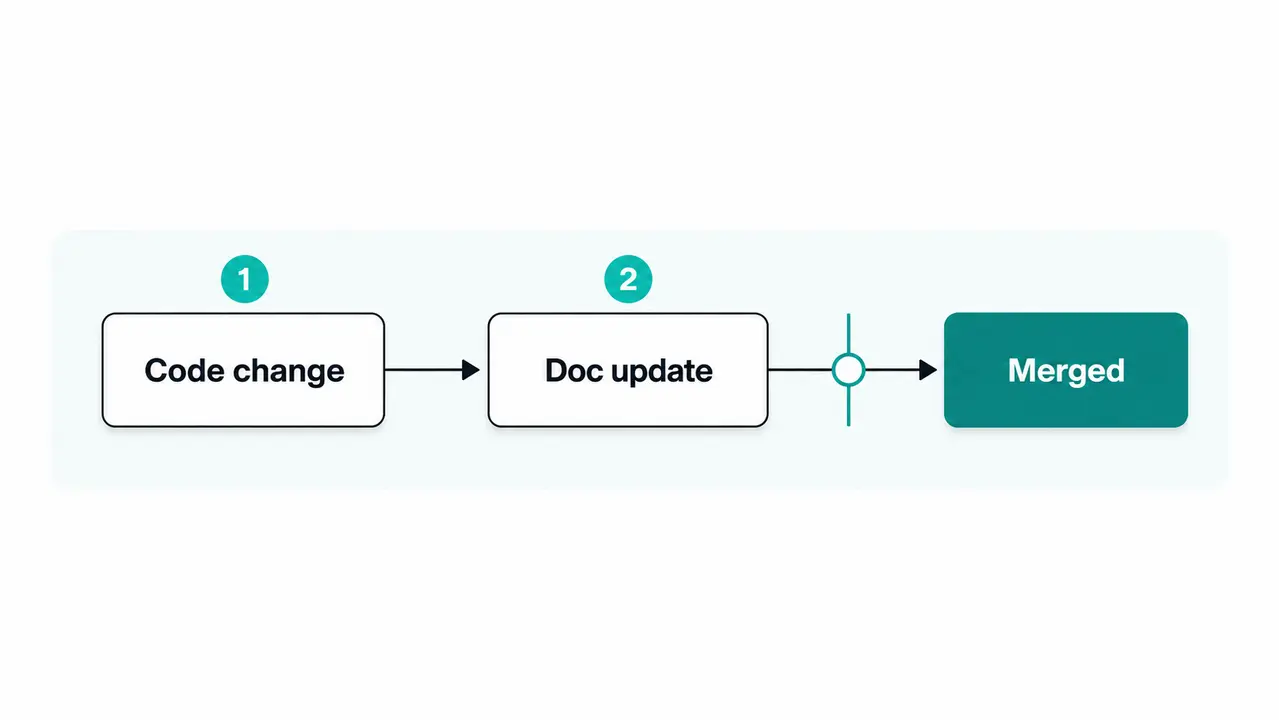
Mandate that documentation updates are part of the PR definition of done for high-churn areas. Hardware revisions, test fixtures, deployment procedures, environment quirks. If the change and the doc do not land together, the doc is already stale. For anything touching security controls and provenance, the NIST Secure Software Development Framework gives you a defensible structure for what must be recorded and why.
The failure mode is the human wiki. One senior becomes the living documentation for the test harness, gets interrupted fifteen times a day, and burns out while being told how indispensable they are. Indispensable is another word for trapped, and trapped people interview.
Team motivation that comes from visible impact
Team motivation is sustained when engineers can trace their daily work to customer outcomes and product reliability. Motivation decays not because the work gets harder but because the connection between the work and its effect becomes invisible.
Two lightweight practices fix the visibility problem. An impact log owned by the tech lead, one or two lines per week recording what shipped and what it changed for users or for reliability. A monthly “what broke and what we fixed” session where the team reviews incidents end to end without blame, connecting the fix to the outcome.
The link runs in both directions, and the impact of system integration issues team morale shows how stability and motivation move together. When engineers cannot see impact, every ticket becomes interchangeable, and interchangeable work is exactly what competitors offer at a higher salary. Fix the visibility and the work defends itself.
Remote and distributed teams that keep cohesion without surveillance
Distributed teams retain developers when collaboration is designed around written decisions, predictable overlap hours, and clear ownership boundaries. What corrodes distributed teams is not distance. It is asymmetry, where some people are in the room where decisions happen and others receive the output.
Design the collaboration deliberately. Async design reviews as written documents with a fixed comment window. Defined overlap hours reserved for pairing and incident response, not for status meetings. For hardware-adjacent teams, a remote lab access schedule so distributed engineers get real bench time rather than depending on whoever sits nearest the test rig.
Surveillance tooling is the failure mode that accelerates the churn it was bought to prevent. Activity trackers and keystroke monitoring tell your senior engineers you do not trust them, and senior engineers have options. Write decisions down instead. Transparency of artifacts replaces surveillance of people, at zero license cost.
Recognition that engineers believe
Recognition retains developers when it is specific, technical, and tied to outcomes the team actually values. Generic praise in an all-hands is noise. “The flaky bus-recovery test you stabilized in October has saved the release train twice since” is signal.
Run a monthly engineering review where peers nominate contributions with evidence attached: pull requests, incident metrics, coverage improvements, migration postmortems. Peer nomination with evidence cannot be gamed by visibility politics, which is what destroys the credibility of manager-only recognition.
One warning. Do not reward heroics. Celebrating the engineer who worked the weekend to save a release normalizes the conditions that required the weekend. Celebrate the boring work instead: reliability improvements, calibration tooling, validation automation. The engineers doing that work are the ones quietly keeping your delivery predictable, and they rarely get the spotlight.
Stay interviews that surface risk before resignation
Stay interviews create a structured channel for dissatisfaction while the engineer still wants the job to succeed. An exit interview tells you why someone left. A stay interview tells you why someone might, while there is still time to change the answer.
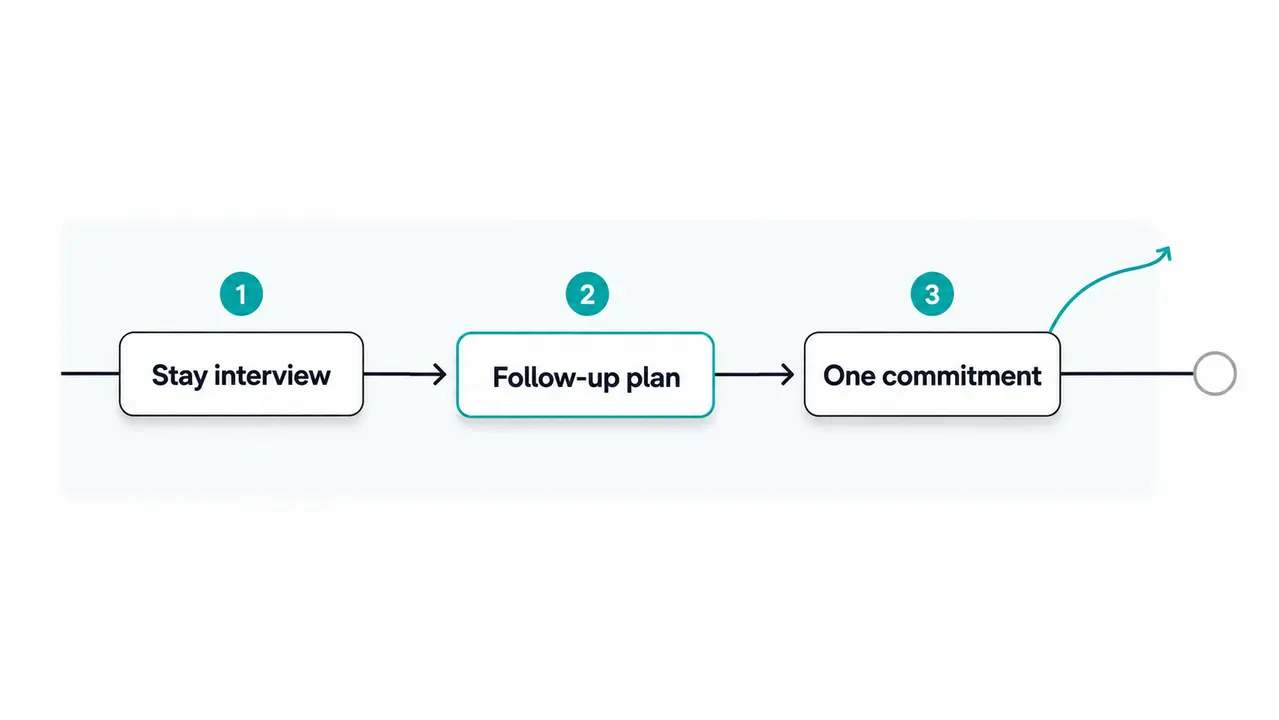
Cadence matters. Every six months for most engineers, quarterly for high-risk roles during major transitions like a migration or a reorganization. Use prompts about blockers, growth, and what would make the next year worth staying for, and let the engineer name the friction before you guess at it.
Talent retention fails at the follow-up, not the conversation. Require a written follow-up plan after every stay interview, with one concrete commitment and a date. If you run stay interviews and nothing visibly changes afterward, you have taught your team that speaking up is decorative, and the next conversation you get will be a resignation letter. One commitment, delivered, rebuilds more trust than ten listening tours.
When to use an embedded partner to reduce churn risk
External embedded teams can improve retention when they reduce overload, stabilize delivery, and bring missing expertise without fragmenting ownership. The key word is embedded. Body-shop augmentation that drops rotating contractors into your backlog makes churn worse, not better, because your permanent staff become coordinators of a revolving door.
Treat partners as part of the team. Shared code review standards, shared on-call context where relevant, shared ownership of subsystems rather than a task queue. A partner that brings specialized firmware or test automation capability is absorbing exactly the load that was burning out your internal seniors.
Watch for the two-tier failure. If internal engineers stop writing code and start writing tickets for contractors, you have built an exit path for your best people. A boutique embedded partner like Sentice works under your practices from one office, which is why Dedicated software engineering teams succeed where staff augmentation churns: the model is ownership, not seats.
Metrics that predict churn earlier than engagement surveys
Operational metrics reveal retention risk sooner than sentiment scores, because friction shows up in the delivery system weeks before it shows up in a survey answer. By the time engagement dips measurably, your at-risk engineer has already had the recruiter call.
The metrics that matter are all in tooling you already run. PR aging per engineer, build stability on the main branch, incident pages per engineer per quarter, WIP limits breached, and onboarding time to first merged PR. Track the trend per person, not the team average, because averages hide the one engineer quietly drowning.
Reading the signals side by side
The metrics only work when you can compare them at a glance and act on what you see. This is the dashboard layout we use when reviewing engineering health for delivery teams.
| Signal | Warning level | What it usually means | First response |
|---|---|---|---|
| PR age, small changes | Over 1 business day | Review capacity is saturated | Pair rotation, review time-boxing |
| Incident pages per engineer | Over 4 per quarter and rising | Reliability backlog is starving | Schedule error budget work |
| WIP limit breaches | More than 2 sprints running | Thrash from scope churn | Weekly risk review re-trade |
| Onboarding time to first PR | Over 2 weeks | Environment or docs failure | Verify setup checklist, fix docs |
| Engagement survey score | Not applicable | Lags operational signals by months | Use as confirmation, not early warning |
One caveat. Metrics can be gamed, and any metric used punitively will be. Pair the dashboard with stay interviews and manager notes in a monthly engineering health review, and treat the numbers as questions rather than verdicts. The trend per engineer is the early warning. The conversation is where you learn whether the trend is a workload problem, a tooling problem, or a resignation already in progress.
Take one signal to your next leadership meeting
If your seniors are quietly drowning, an embedded team can absorb the load before the resignations start. Tell us what your delivery signals look like and we’ll help you read them.
Frequently asked questions
How do you retain developers during a rewrite when daily progress feels slow?
Rewrites fail as retention events when progress becomes invisible. Publish a weekly migration burn-down by subsystem, celebrate interface contracts locked and legacy paths deleted, and let engineers own vertical slices end to end rather than horizontal layers. Slowness that produces visible, credited milestones retains people. Slowness that produces an ambiguous status slide does not.
What is the best way to measure developer satisfaction without sending endless surveys?
Stop surveying and start watching operational signals: PR aging, build stability, pages per engineer, and WIP breaches, tracked per person monthly. Supplement with brief stay interviews twice a year, which produce actionable specifics rather than Likert scores. If you must survey, cap it at four questions once a year. Anything longer gets survey fatigue and dishonest answers.
How do you handle a senior engineer who refuses to document their knowledge?
Make documentation part of merged work, not a separate favor. Definition of done for high-churn areas includes the doc update, and the reviewer enforces it. Pair the reluctant senior with a backup owner who writes the first draft from the senior’s explanations, which transfers knowledge and removes the writing burden. Job security through obscurity should never be a supported strategy.
Can external consultants actually improve internal team retention?
Yes, when they absorb overload rather than fragment ownership. An embedded partner that shares your review standards and owns subsystems reduces the pressure that was pushing your seniors out. The model fails when internal engineers become coordinators for contractors, which accelerates churn. Judge any partner by whether your staff write more code after six months, not less.
What is the first metric to look at when engineering turnover spikes?
On-call load per engineer over the trailing two quarters. Unbounded incident response is the most common single driver of resignations in delivery teams, and it shows up in paging data before anyone complains. Check whether pages clustered on the people who left. If they did, fix the reliability backlog before you post the job requisition, or you are hiring the next attrition victim.
Retainment is a systems discipline
The senior who resigns mid-migration is not leaving for a competing salary. They are leaving because the migration had no decision record, no backup owner, and no relief from the pager. Pick one metric from this article, PR aging or pages per engineer, and put it on the agenda of your next engineering leadership meeting. Talent retention is an engineering systems problem. Treat it like one, and the resignations get boring, which is the goal.
About Sentice

Sentice is a boutique software engineering partner founded in 2013 by Roni Levi and Martin Petkovic, now headquartered in Skopje, North Macedonia. Rather than supplying individual developers, we build embedded teams that blend with a client’s culture, tech stack and goals, working together from a single office under our own technical leadership. We deliver dedicated software engineering teams, end-to-end software solutions, product development, and system and embedded engineering, and we act as technical advisors across the full development lifecycle, from specification and architecture through development, testing and support. We use AI coding tools across every project, and we help clients integrate AI into their own products through chatbots, MCP services, connected application layers and workflow automation. Some of the clients we started with more than a decade ago are still building with us today.