
The review queue hit four days on a Tuesday, and nobody noticed until the release slipped. That is usually how a scaling problem announces itself at a scaleup. The platform team is stable, the architecture holds, the roadmap is funded, and the feature backlog still slips week after week. You do not have a talent problem. You have a capacity problem inside a system that works, which is exactly the situation where ripping delivery out of that system and handing it to a vendor is the wrong move. Below we will unpack when extension is the safest scaling move, where teams get the models confused, what to keep in-house, and a 30-day integration plan you can run.
Reading time: 11 min
Key points
- Team extension adds delivery capacity inside your engineering system while you keep architecture authority, quality gates, and roadmap control.
- The three models differ on who runs standups, who merges to main, and who owns incident follow-up.
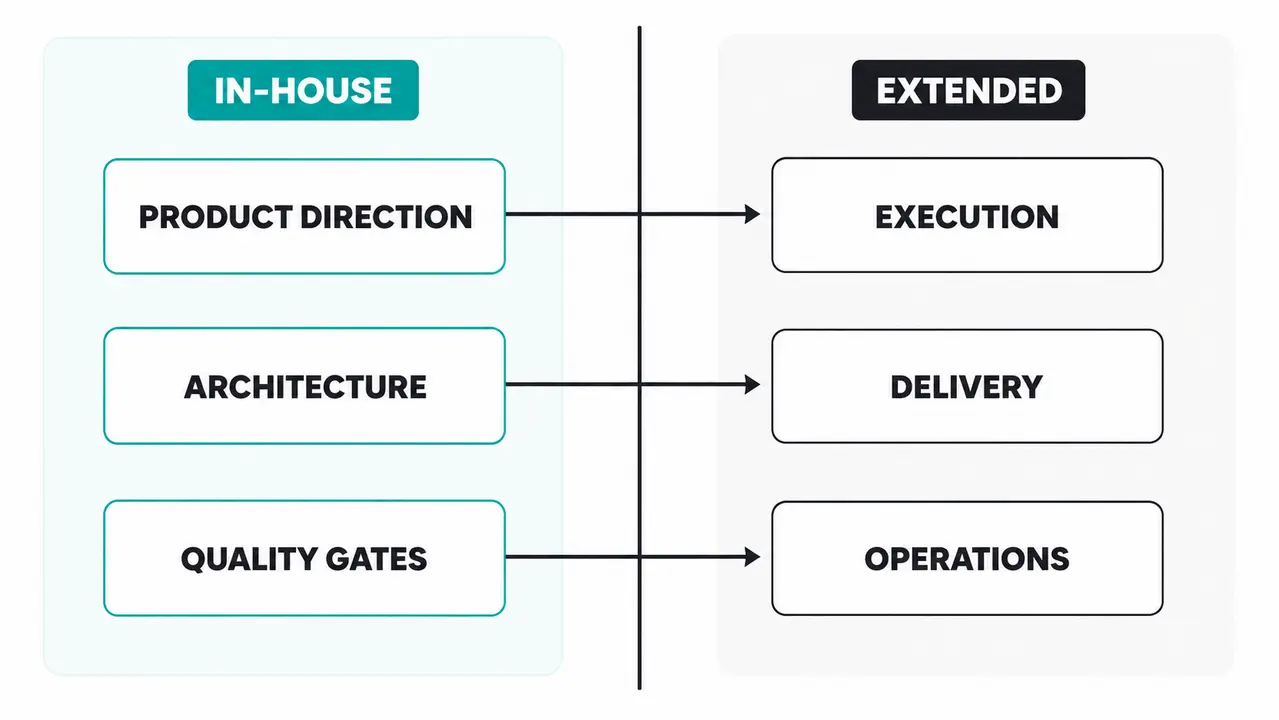
- Keep product direction, architecture authority, and final quality gates in-house even when execution is extended.
- A first 30 days should produce merged software, shared standards, and written ownership boundaries.
Table of contents
When software team extension is the safest way to scale R and D
Software team extension services fit best when you need more delivery capacity inside your existing engineering system without handing off product ownership. The distinction matters more than the headcount. A scaleup we often see looks like this: a platform team of eight that has run the same monolith-to-services migration for a year, a growing feature backlog from sales commitments, and a hiring plan that will not produce a productive senior engineer for another five months. During R&D expansion, every one of those months costs roadmap quarters.
Extension is the safe option here because the risk profile is asymmetric. You keep your architecture authority, your quality gates, and your roadmap control. The added engineers work in your repo, follow your branching strategy, and attend your standups. The alternative, a project-managed vendor team, quietly forces you to rewrite your internal processes to fit their delivery model. That rewrite is where most failed outsourcing engagements actually die, not in the code quality.
You are buying integration, not bodies.
Where teams confuse staff augmentation, team extension, and outsourcing
The three models get used interchangeably in sales conversations, and the confusion is expensive. The real difference is who owns delivery management and technical decisions day to day. Ask three questions of any model on offer: who runs standups, who merges to main, and who owns incident follow-up.
In staff augmentation, an individual contractor slots into your team, and you manage everything. In outsourcing, the vendor runs the process, the standups, and the delivery, and you receive output against a specification. Team extension sits between them and leans toward your side: a stable group of engineers, provided and supported by a partner, embedded in your workflow, with your leadership setting priorities and accepting work.
The counter-case we see repeatedly is a buyer who asked for embedded engineers and received a project-managed outsourcing team that bypassed internal standards, worked in a separate repo, and shipped code your maintainers refused to touch. When the engagement needs to be a self-managed delivery unit with its own management layer, the dedicated team model is the honest answer, and our dedicated software engineering teams page describes how that structure works.
The week a senior engineer leaves mid-migration
Team extension is most valuable when a single departure would stall a migration, a security push, or a platform refactor. Picture a cloud migration at week fourteen. Your senior engineer, the one who holds the migration map in their head, resigns on Monday. By Wednesday the review queue is growing, Terraform changes sit unreviewed, and the release train slips. By Friday you are looking at a three-month hiring cycle for a replacement who then needs two months of ramp.
Two extension engineers with real cloud migration experience can hold the line inside two weeks, if you give them the migration map before they start. That last clause is where these engagements fail. Adding external engineers without a documented migration plan and expecting them to infer intent from a Jira board produces confident work in the wrong direction. The failure mode is not incompetence. It is missing context multiplied by speed.
If your risk register contains a single point of failure with a resignation letter attached, extension is the fastest mitigation that does not hand ownership to anyone.
What technical leaders should keep in-house
Keep three things internal even when execution capacity is extended: product direction, architecture authority, and final quality gates. In practice that means certain roles never leave your org chart. A staff engineer who owns cross-cutting technical decisions. A named security owner, whether or not security is their whole job. An incident commander who is on your payroll when production breaks at 2 a.m. Release signoff authority stays with you.
The counter-case is a split brain architecture. It happens when decision rights between internal and external teams are unclear, so both groups make architectural choices in parallel. You get two logging patterns, three ways of handling idempotency, and a GraphQL gateway nobody remembers approving. The duplicated services are not the worst of it. The worst of it is that your seniors spend the next two quarters reconciling patterns instead of building product.
Write the boundary down. Which decisions need internal signoff, which need consultation, and which the extended team owns outright. Ambiguity here costs more than any rate card ever will.
How an embedded extension team should work inside your workflow
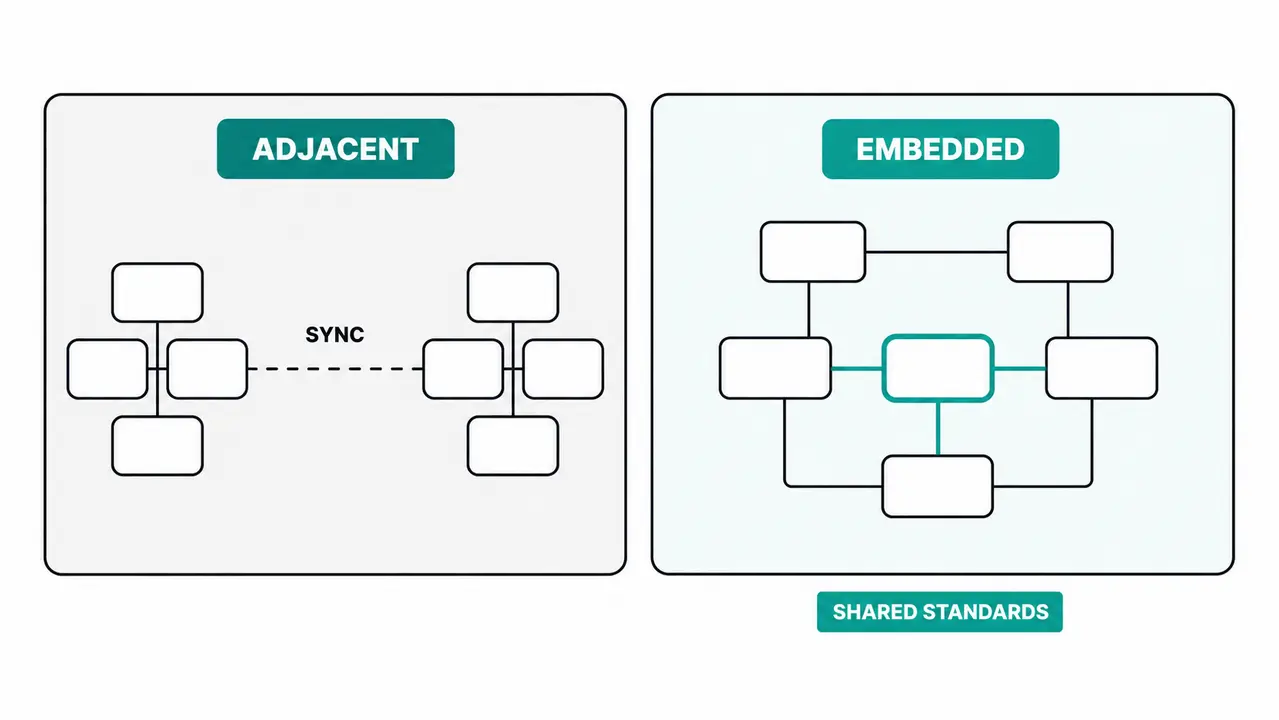
An embedded extension team adopts your engineering system from day one, not eventually. Your repo structure, your branching strategy, your CI checks, your sprint cadence. If you run GitHub flow with mandatory checks, linting rules, and code owners per directory, the extended engineers work under all of it in their first week. There is no parallel tooling, no separate branching convention, no vendor wiki.
Embedded product work raises the bar further. When your product includes devices, the team inherits constraints that pure web engineers never meet: hardware-in-the-loop testing on real rigs before a firmware merge, coordination with device fleet telemetry so a bad OTA does not strand units in the field, and release gating that respects both the app store calendar and the manufacturing calendar. Our system and embedded engineering work covers exactly this surface, where firmware, cloud ingestion, and device behavior have to move together.
The test is simple. Ask an extension engineer in week three why your CI pipeline runs the checks it runs. If they can explain the tradeoff, they are embedded. If they can only describe the pipeline, they are adjacent.
Shared definition of done across web and embedded work
A shared definition of done prevents the integration delays that show up when hardware and software components converge late. The list should be explicit and identical for both sides: unit and integration tests passing, documentation updated, release notes drafted, observability hooks in place, and for anything touching firmware, a field upgrade plan that states how already-deployed devices get the fix. A pull request is not done when CI is green. It is done when the next engineer, and the next device, can handle what it ships.
Where teams underestimate onboarding
Onboarding fails when it is treated as introductions and a laptop. What an incoming engineer actually needs is a structured transfer of system context, and almost nobody has it written down. The checklist is short. Local dev setup that runs on the first attempt, with a one-command bootstrap. Secrets handling policy and access to a properly scoped vault. Staging environment access from day one. Incident history, at least the last six months, so they learn how the system breaks and not just how it is supposed to work.
Without that structure, external engineers stay stuck on low-impact tasks for weeks. They are not slow. They lack the map, and asking for it repeatedly feels expensive when every question interrupts a senior. The hidden cost of a weak onboarding is that your own team pays it in interruptions.
Set a hard target: first merged pull request within 48 hours. Small, real, reviewed. A new engineer who has shipped something in two days has the setup working, has met the code owners, and has learned your review culture. One who has not will spend a month reading a codebase with no compass.
The minimum documentation that makes scaling possible
You do not need a documentation culture. You need four living documents that reduce dependency on tribal knowledge. A system diagram, current within one sprint, showing services and their data flows. A service ownership map naming the team responsible for each component. Runbooks for the incidents that recur, with actual commands in them. And an architecture decision record log, so the next engineer knows why the event bus exists before proposing its removal.
Four documents. Anything beyond that set has a habit of rotting, and rotten documentation is worse than none because it misleads with confidence.
The mechanism that keeps docs alive is updating them in the same pull request as the code change. When the definition of done includes the runbook, documentation stops being a project and becomes a byproduct. We have watched teams fail scaling pushes purely because the second wave of engineers could not get answers without scheduling meetings, and the seniors who held the answers were fully booked.
The counter-case is real. If nobody reads a document for two quarters, delete it. Dead weight in Confluence teaches newcomers to distrust everything in the space.
How to evaluate engineers beyond a resume screen
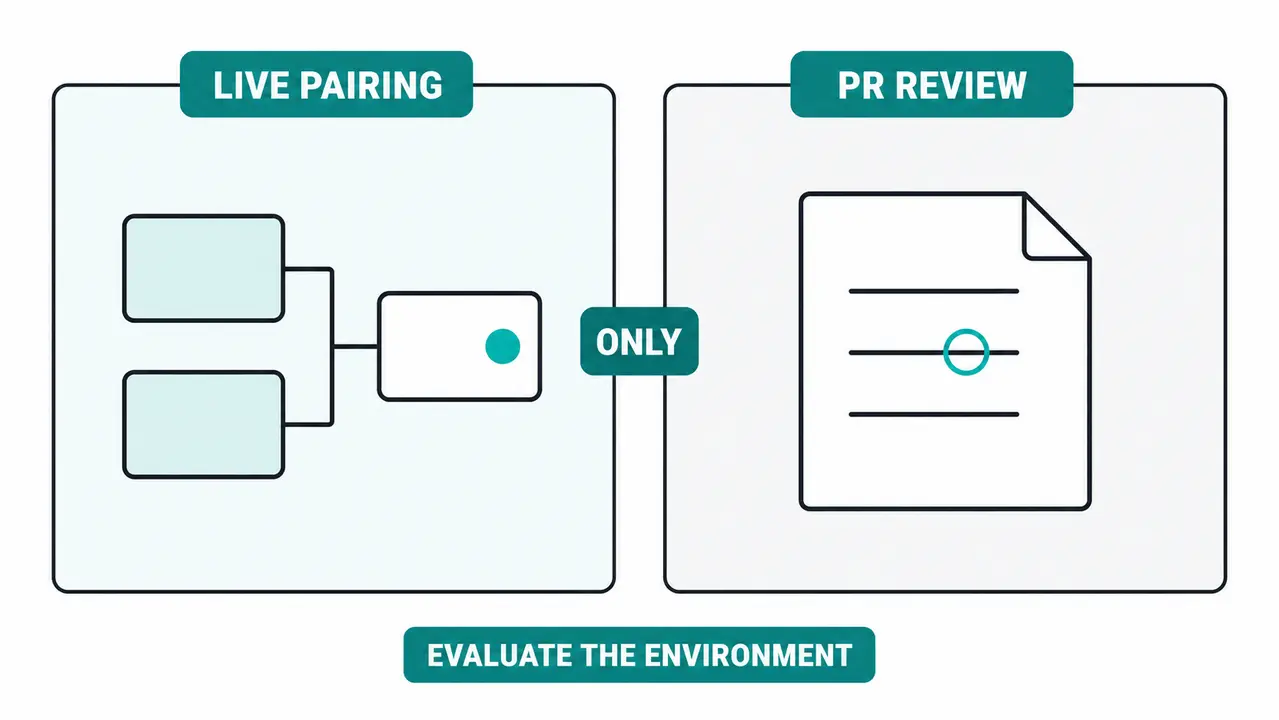
You are evaluating the partner’s engineers, so run the evaluation yourself rather than accepting a stack of CVs. What you need to know is not whether they can code. It is whether they can operate in your environment. Two exercises answer that. First, a live exercise matching your stack: a debugging session on a broken service in your actual language, or a pairing session on a small feature. Watch how they read unfamiliar code. Second, a review of a real pull request, ideally one with a subtle flaw planted or known.
The counter-case appears constantly in embedded work. Strong algorithmic coders who cannot reason about timing constraints, memory limits on a microcontroller, or why dynamic allocation is forbidden in the hot path. In web work the equivalent is a candidate who writes beautiful code and cannot survive review in a high-standards repo, arguing with every comment instead of engaging with it.
Ask one diagnostic question. “Tell me about a pull request you rejected and why.” Engineers with real review maturity answer instantly and specifically. Everyone else talks about code style.
Security and access without slowing delivery
A secure setup is not a locked-down setup. It is least-privilege access, auditable workflows, and clear data handling rules, designed so that the default path is also the safe path. Concretely: SSO for every tool the team touches, role-based access scoped by environment, separate dev, staging, and production environments with no shared credentials, and a secrets manager instead of a shared vault entry or, worse, a spreadsheet.
Production access for the extended team should be grantable, time-boxed, and logged, not permanently open. The failure mode this prevents is blunt: broad production access spreading across more people than your security owner can track, followed by an incident nobody can attribute, followed by a compliance conversation you do not want to have with an enterprise customer.
Security that slows engineers down gets bypassed, and the developers themselves say so. The 2025 Stack Overflow Developer Survey documents how tooling and process friction shapes developer experience at scale. Friction-heavy security processes push people toward workarounds, which is why access design matters as much as access control. Design the secure path to also be the fast path, and the two goals stop competing.
How the three engagement models compare
The right model depends on what you actually need: raw capacity, a self-managed delivery unit, or a full product build partner. The comparison that matters is ownership versus management load.
| Dimension | Staff augmentation | Team extension | Dedicated team |
|---|---|---|---|
| Delivery management | You manage everything | You set priorities, partner supports continuity | Partner manages delivery |
| Technical decisions | Fully in-house | In-house with shared execution | Shared or partner-led |
| Management overhead for you | Highest | Moderate | Lowest |
| Best fit | One or two gaps in an existing team | Scaling delivery inside your system | New product lines with no internal bandwidth |
Our verdict is direct. If you have strong internal engineering leadership, team extension is usually the strongest choice, because it preserves your internal standards and your roadmap control while removing the hiring bottleneck. Dedicated teams win when you genuinely lack the management layer to absorb more people. Augmentation wins only at small scale, since managing five individual contractors quickly becomes a second job.
Not sure which model fits your roadmap?
Tell us about your current team, your stack, and where delivery is slipping. We will tell you plainly whether extension, a dedicated team, or something in-house is the right call.
Why in-house hiring stalls at scale
In-house hiring rarely stalls for lack of candidates. It stalls because interview bandwidth and onboarding capacity lag behind growth targets. Your senior engineers are your interviewers, and they are also your deliverers. Every hour in an interview loop is an hour not spent reviewing pull requests, and the review queue was already the constraint. Then each hire needs three to six months of ramp before they produce at team pace, and your seniors spend that period teaching instead of building.
The math compounds badly. Growing from ten to twenty engineers means roughly doubling your interviewing load while halving the senior capacity available to absorb it. That is the structural reason team scaling through hiring alone stops working past a certain rate, and why more companies treat team scaling as a portfolio problem rather than a recruiting problem.
Cross-border capacity is expanding fast enough to make this a solved problem for teams that plan it properly. Global ICT service exports have grown steadily for years, with the data visible country by country at the World Bank. For a concrete picture of when partnering beats hiring, our piece on how boutique partnerships accelerate tech team growth walks through the decision in detail.
What a two-day review queue actually costs
A slow review queue is the hidden limiter that makes added headcount feel useless. Watch the pattern. Pull requests pile up. Authors context-switch to other work while waiting, then pay a reload cost when review feedback arrives two days later. Fresh engineers assigned to new tickets while their last three sit unreviewed. Release confidence drops, because nobody has looked closely at what is about to ship.
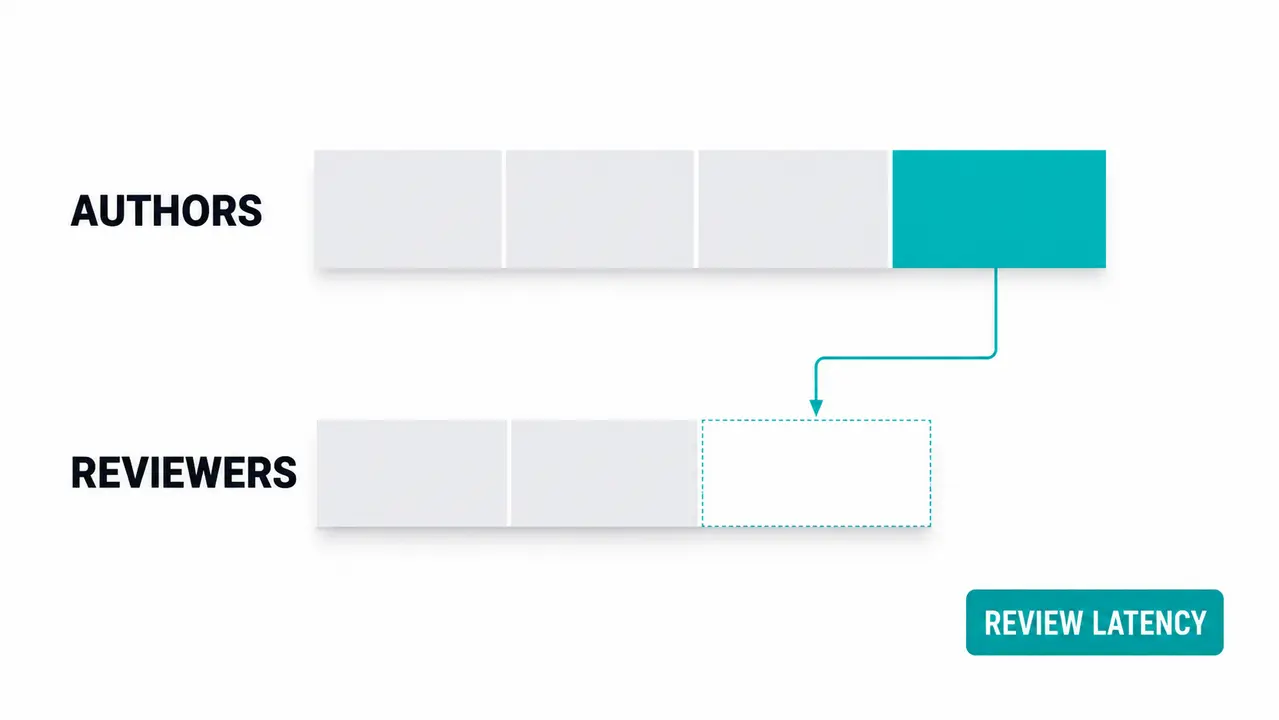
Then the failure mode specific to extension arrives. The extended engineers generate pull requests at full speed, and every one of them lands in the same senior review queue. You bought throughput and spent it on latency. Capacity that cannot flow through review is not capacity.
The fix is to plan review capacity as part of the scaling strategy, not as an afterthought. When we embed engineers into a client team, part of the pod structure includes who reviews whom, with extended seniors holding review duties from week one so the queue gains reviewers at the same rate it gains authors. Set a review latency target, one business day or better, and measure it. If adding people pushes latency up instead of down, your bottleneck is process, and the next hire should be a reviewer.
Keeping architecture coherent while adding people fast
Architecture stays coherent when decisions are recorded and refactors are planned as products, not campaigns. The artifacts are small: architecture decision records that capture the choice, the alternatives, and the reason. Interface contracts between modules, versioned and owned. Module boundaries that are documented well enough that a new engineer knows which repository a change belongs in before they ask.
The counter-case is what happens without them. Two sub-teams work in parallel, one internal and one extended, each under delivery pressure. They solve the same problem twice, because neither knew the other was solving it. Six months later you have two job schedulers, three clients for the same internal API, and a duplicated notifications service that a vendor demo spawned. Nobody did anything wrong individually. The coordination failed structurally.
Embedded systems make this sharper. A firmware interface change on the device side must be coordinated with the cloud ingestion service that parses its payloads, or the fleet starts sending telemetry nobody can read. Coordinate through the contract, not through a Slack message someone will lose.
Team scaling patterns that work from 2 to 12 added engineers
Scaling works when you add people in pods aligned to outcomes, not as a single pool of interchangeable developers. A pool has no ownership, so every ticket is contested ground and reviews stall in the shared queue. Pods of three to five engineers own a surface and a backlog.
Three patterns cover most situations. A feature pod owns a product area, taking slices end to end through your existing services. A platform pod owns internal tooling, CI, and developer experience, and is usually the first pod worth funding because it pays back across every other pod. A reliability pod owns observability, incident response, and the flaky test backlog that everyone else has learned to live with. When Sentice structures these pods for a client, the first decision is never headcount, it is which outcome is under-served and what ownership boundary the pod needs to fix it.
Know when to stop. When coordination overhead rises faster than throughput, when sprint planning takes three hours and every dependency crosses a pod boundary, adding another pod makes it worse. Consolidate before you expand.
How to run delivery when the team is split across locations
Distributed delivery works when the communication rules are explicit and the overlap hours are predictable. Define an overlap window, ideally three to four hours, and treat it as the space for anything that needs real-time back and forth: design debates, pairing, incident triage. Everything else moves async.
Async standups in writing, in a channel, before the overlap window opens. Each entry says what moved, what is blocked, and what needs a decision, and the meeting version happens only when the written version reveals a tangle. Keep a decision log with dates and owners, so a decision made in a channel thread survives past the scroll. This works across any stack, any process framework, and any pairing of time zones.
The failure mode is meeting-driven development. Every question becomes a call, calendars fill, and engineers defend their focus hours by going silent. The silent ones are where invisible blockers live. If your async standup entries keep saying “no update,” you have a visibility problem, not a quiet team.
Signals that your extension partner is not really embedded
If the team cannot adopt your standards or explain your tradeoffs, you are buying output, not integration. The signals show up early. Separate tooling: they track work in their own system and sync it weekly, which means the sync is the source of truth. Reluctance to do reviews: their engineers open pull requests but never review yours, positioning them permanently as juniors regardless of seniority. Unclear accountability: when a defect escapes, the answer involves a call between account managers rather than a name and a fix.
A genuinely embedded engineer argues with your architecture. Politely, in a pull request comment, with reasons. An engineer who never disagrees is not aligned, they are disengaged.
Give it one reset period, one sprint with explicit expectations restated. If the signals persist, switching models or partners is stronger than adding more people, because more of the wrong structure just fails at greater scale.
A 30-day integration plan for software team extension services
The first 30 days of software team extension services should produce three things: working software merged to main, shared standards that both teams follow without prompting, and written ownership boundaries nobody has to renegotiate in week six. Without that plan, extended teams are left to figure out priorities on their own, and they will, badly, because guessing priorities is a full-time job with negative output.
Week one covers access, environment setup, the first small pull requests, and reading the incident history. Week two adds a real ticket load and the first review duties. By week three the team should ship a user-visible slice of functionality, small but real, end to end through your pipeline. Week four is a retrospective and the handover from integration mode to normal cadence.
The counter-case is the engagement that starts with a kickoff call and then silence. Thirty days later the extended engineers have merged almost nothing, your seniors are fielding daily questions with no structure, and everyone is quietly recalculating the value of the whole arrangement. The plan is cheap. Its absence is not.
Frequently asked questions
How fast can a team extension engagement start without creating chaos?
Fast starts work only when access provisioning, onboarding documentation, and ownership boundaries are already prepared. If any of the three is missing, begin with a short discovery and integration sprint instead. One week of structure up front saves a month of drift.
What is the difference between extending a team and hiring freelancers?
Team extension is a managed, stable capacity model built to integrate into your engineering system for the long term. Freelancers optimize for task completion, one engagement at a time, and carry no continuity obligation when they rotate off. Continuity is the actual product difference.
Can team extension work for embedded and IoT products?
Yes, when the engagement covers the full interface surface: firmware, device-to-cloud protocols, test rigs, and release gating. An extension team that only touches the web dashboard while firmware stays opaque will create integration problems at exactly the wrong moment.
Who manages the extended engineers day to day?
In a true extension model, your engineering leadership manages priorities, acceptance, and technical direction. The partner handles staffing, continuity, and replacement if an engineer rotates off. If a vendor insists on managing delivery themselves, that is a different model sold under the wrong name.
What should we measure to know it is working?
Cycle time, review latency, defect escape rate, and delivery predictability. Story points measure planning, not delivery. If review latency and cycle time improve within two sprints, the integration is real.
Who owns the code and documentation when the engagement ends?
You do, from the first merged pull request. Code lives in your repositories, documentation in your systems, and decisions in your ADR log. A partner whose work product only exists inside their own tooling has failed the basic test of the model.
Your next step is a working agreement, not a vendor shortlist
Before you evaluate a single partner, draft the working agreement: who owns architecture decisions, which roles stay in-house, what the first 30 days cover, and how review capacity grows with the team. The scaleup with the slipping backlog from the opening does not need more bodies, it needs engineers who merge into an existing system without breaking it. You can buy short-term output, or you can build long-term engineering capacity, and the two require different partners. Map your ownership boundaries today and you will know within an hour whether your team is ready for embedded extension.
Drafting your working agreement?
Bring your ownership boundaries and your 30-day outline to a conversation with our engineers, and we will pressure-test the plan before you commit to a model.
About Sentice

Sentice is a boutique software engineering partner founded in 2013 by Roni Levi and Martin Petkovic, now headquartered in Skopje, North Macedonia. Rather than supplying individual developers, we build embedded teams that blend with a client’s culture, tech stack and goals, working together from a single office under our own technical leadership. We deliver dedicated software engineering teams, end-to-end software solutions, product development, and system and embedded engineering, and we act as technical advisors across the full development lifecycle, from specification and architecture through development, testing and support. We use AI coding tools across every project, and we help clients integrate AI into their own products through chatbots, MCP services, connected application layers and workflow automation. Some of the clients we started with more than a decade ago are still building with us today.