
The sprint review looks great. Twelve tickets closed, velocity up 15 percent, burndown clean. Six weeks later the same codebase fails under load and nobody can explain why the caching layer was built the way it was. That gap between reported progress and actual outcome is where most technology partnerships quietly die, and it rarely shows up in a dashboard. We have inherited those codebases. We have also been the external team that had to earn back trust after a predecessor burned it.
This article is about the mechanics of making a partnership work after the contract is signed. The selection process is over. What follows is the part most teams improvise. Below, we’ll cover the definition of done, a structured first two weeks, the operating model that prevents decision latency, ownership splits, quality guardrails, and the signals that tell you whether the partnership is actually healthy.
Reading time: 10 min
Key points
- Align on a three-layer definition of done before the first sprint: code, deployment, and business impact.
- The first two weeks decide whether the partnership becomes an extension of your team or a ticket factory.
- Most delivery slowdowns come from waiting on decisions, not from writing code; a DRI per domain and a 48-hour decision SLA fix that.
- Embedded teams outperform staff augmentation on complex systems because the unit that holds context has to be a team, not a person.
Table of contents
Working with a technology partner starts with a shared definition of done
The first question in any discussion of how to work with technology partner teams is deceptively simple. What does “done” mean? If your side means “merged to main” and the partner means “code written and pushed to a branch,” delivery will look productive while outcomes drift apart. Align on the answer in three layers before the first sprint of any tech partnership. Done in code means reviewed, tested, and merged. Done in deployment means running in a real environment with monitoring hooks and a rollback plan. Done in business impact means the metric the feature was supposed to move is actually observable.
Write acceptance criteria that include non-functional requirements, not just feature behavior. Specify what production ready covers, such as test coverage on critical paths, documentation, runbooks, and alert thresholds.
One more artifact earns its weight. A lightweight decision record, even three sentences in a shared wiki, capturing the tradeoff behind each architecture choice. Without it, six months later nobody can explain why the system was built that way, and when it fails under load the blame starts. With it, the conversation stays technical.
The first two weeks decide whether the partnership will scale
Most relationships either become a true extension of your team or stay a ticket factory, and the split happens early. Treat the first two weeks as a structured integration phase with explicit outputs, not a soft ramp where people “get up to speed.”
Require specific outputs by day 10. A local dev environment that runs on a clean machine. First pull request merged. CI pipeline understood well enough to fix a flaky test. Access to logs and metrics in your observability stack. One small feature shipped end to end, from ticket through deployment. If any of these slips past day 10, the cause is almost always on your side, usually access or missing context, and you need to know that in week two rather than month three.
Assign two internal owners before day one. A product context owner who can answer scope questions, and a platform access owner who can cut through access requests in hours instead of weeks. Without them, basic questions become a multi-week bottleneck and the partner learns to stop asking.
At the end of week two, run a 30-minute retro and lock in the working agreements. Do it once. It sets the pattern for every correction afterward.
Where teams underestimate onboarding
Onboarding fails when it is treated as tool access plus introductions. The real work is transferring system intent, constraints, and the reasons behind past decisions. A new engineer can read the code. What they cannot read is why the order service deliberately duplicates customer data, or which external dependency is fragile and must never be called synchronously during checkout.
Give the partner a system map. One page showing services, data stores, external dependencies, and known failure modes. Share your last two postmortems, unedited. A postmortem teaches more about real constraints than any architecture diagram, because it shows where the system actually broke rather than where the diagram says the lines are.
The quiet failure mode is verbal standards. If coding conventions and review expectations only exist in your senior engineers’ heads, the partner will guess, and you will rework. Share two or three “good pull requests” pulled directly from your repo, with a sentence on why each one passed review. It prevents the review pileup that poisons the first month. Documentation you can point to beats documentation you have to recite.
The operating model that prevents decision latency
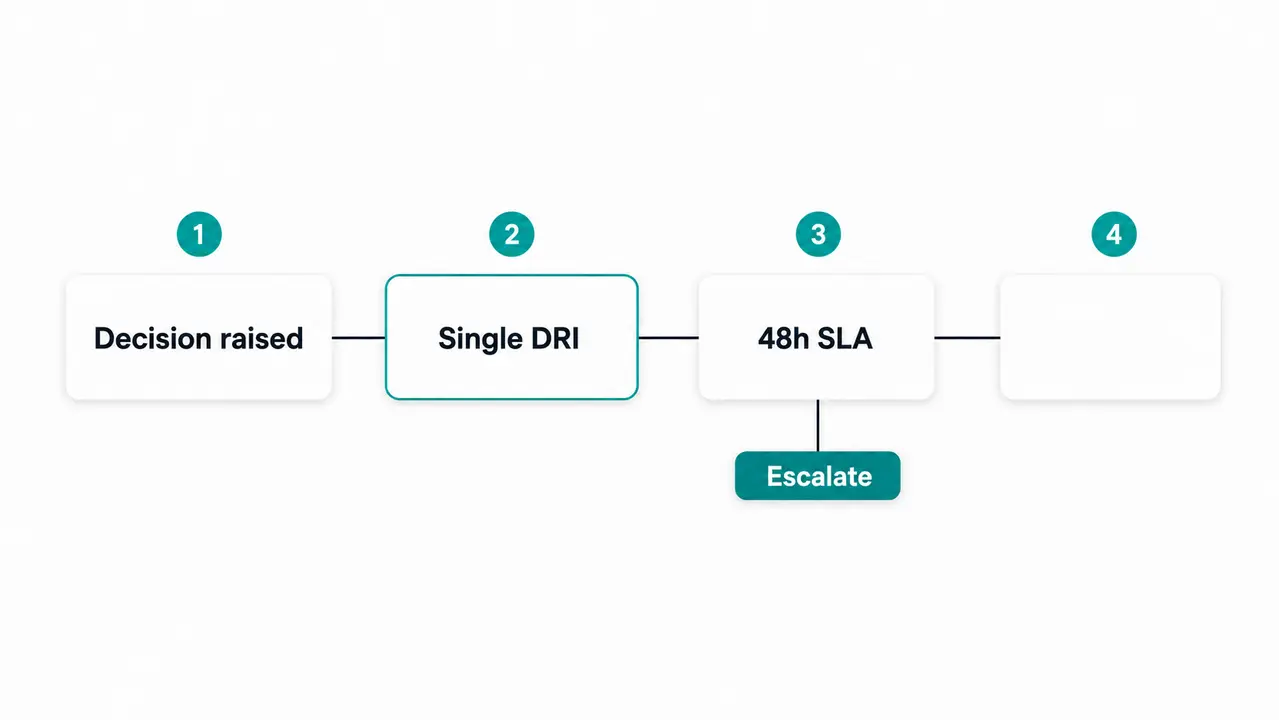
Most delivery slowdowns do not come from writing code. They come from waiting on decisions. An architecture question sits in a channel for four days, the sprint item blocks, and the velocity chart tells a story nobody recognizes. A clear operating model defines who decides, who advises, and how fast decisions must land.
Name a single DRI, a directly responsible individual, for each recurring decision domain. Product scope, architecture, security approvals, release approvals. One name each. Committees produce latency. Then set a decision SLA. Forty-eight hours for any architecture decision that blocks a sprint item is a reasonable default. If a decision cannot land in 48 hours, that is a signal the question needs escalation, not silence.
Watch one specific trap. Using the weekly engineering sync for both decisions and status updates buries critical decisions under progress reports and creates meeting sprawl. Keep status in an async channel. Reserve synchronous time for decisions that need argument.
A simple RACI that engineering leaders actually use
Keep it to six or eight recurring decision types, not a full org chart exercise. The ones that matter are deployment approvals, database schema changes, third-party vendor additions, and production incident command. For each, one line. Who is responsible, who approves, who needs to be informed. If your RACI does not fit on one page, it will not be used, and an unused RACI is worse than none because it creates the illusion that ownership is defined.
The collaboration artifacts that keep work aligned
An external team works best when alignment lives in shared artifacts rather than in people’s heads. People rotate, take vacations, and change teams. Artifacts persist. The goal is to make progress legible across time zones so that anyone, on either side, can answer “what is happening and why” without scheduling a call.
Maintain a minimum artifact set. A roadmap slice covering the next quarter, not the full year. A sprint goal stated as an outcome rather than a ticket count. The definition of done. Architecture decision records. Interface contracts for anything crossing a team boundary. A test strategy. A release checklist. Keep a single source of truth for requirements and a single one for technical decisions, and make it a rule that anything living only in chat or email does not exist.
The failure mode here is engineers reverse-engineering requirements from a ticket title, which produces scope creep and missed expectations in equal measure. Make “ready for dev” an explicit state with acceptance criteria attached. Work that enters the sprint without it is borrowing time from next sprint at interest.
Splitting ownership without creating gaps
Ownership should be split by outcomes and boundaries, not by arbitrary layers like backend and frontend. Layer-based splits guarantee that nobody owns the user-facing outcome, because every outcome crosses layers. Define ownership around components, interfaces, and operational responsibility instead.
Assign service ownership explicitly. Who owns uptime for the payment service. Who participates in on-call. Who provides inputs during an incident, and within what timeframe. Clarify who owns technical debt decisions and when a refactor is allowed to interrupt feature work, because if that rule is unwritten, refactoring never happens or happens constantly, and both extremes cost you.
Interface ambiguity is the expensive one. It causes integration failures late in the sprint, when they are most expensive to fix. Define who approves API changes and what the versioning strategy is before the first contract is written. Ownership boundaries are especially critical when building hardware-software systems, where a firmware interface change can invalidate physical devices already in the field and there is no rollback for shipped hardware.
The week a senior engineer leaves mid-migration
Partnership resilience shows up when key people change, because they will. Your lead architect takes a role at another company in week six of a data platform migration. The partner’s senior engineer who understood the whole billing flow rotates onto another client. Neither event is a failure. Both are normal. What matters is whether knowledge survives the change.
Build continuity into the engagement as a practice, not a reaction. Pair on risky areas so at least two people understand them. Require short design notes, half a page, for any nontrivial change. Record a 20-minute video walkthrough for critical flows, because a recording made before a departure is worth more than an exit interview made after. Keep a living migration plan with checkpoints and rollback criteria, updated weekly.
The failure mode is subtler than turnover itself. When a partner’s leadership only reviews delivery velocity and never looks at code health, the client inherits a codebase that shipped fast and cannot be maintained. Velocity reviews without quality reviews select for exactly the wrong behavior, and by the time you notice, the people who understood the system are gone.
Communication that technical leaders can trust
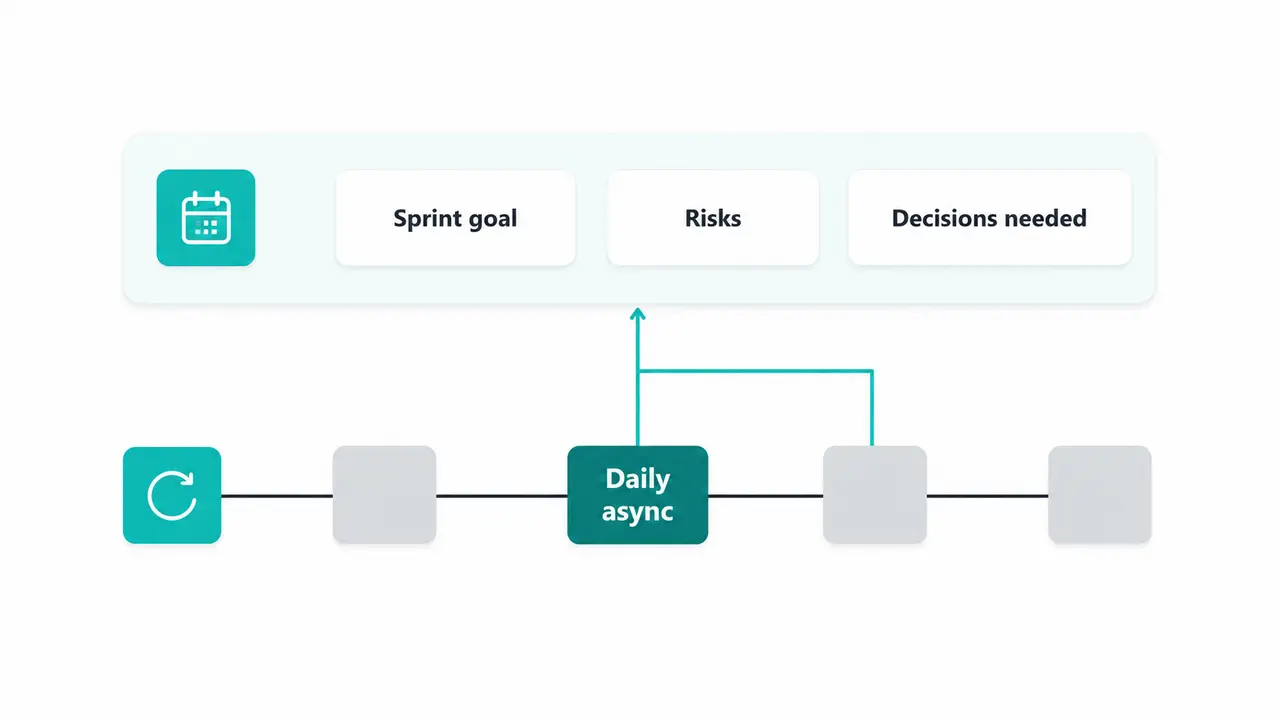
Trust comes from predictable signals, not frequent updates. A partner that messages constantly but never surfaces risk is worse than one that reports weekly and calls out problems plainly. Agree on a cadence and a format that makes progress auditable throughout the development collaboration, then hold both sides to it.
Two layers work well. A weekly update covering sprint goal progress, risks, decisions needed from you, and upcoming dependency asks. A daily async update with three lines. What shipped. What is blocked. What changed in scope. Written, searchable, and consistent, so a month later you can reconstruct what happened and when.
Watch the demo. Demos become theater when they are slide decks with screenshots instead of working behavior. It hides integration issues until they are expensive. Insist that demos show real functionality in a staging environment, clicked through live, with the data path visible. A partner confident in its work demos the product. A partner hiding something demos slides.
Keeping quality high when velocity pressure rises
Velocity pressure is where partner relationships break down. A deadline approaches, shortcuts accumulate, reviews get skipped, and the debt is invisible until it is not. You cannot negotiate quality sprint by sprint, because every sprint has a deadline. Put guardrails in place that hold regardless of pressure.
Define the non-negotiables and write them down. Code review rules, meaning no self-merge on critical modules. Test thresholds for anything touching money, auth, or data integrity. Static analysis in the pipeline. Release gates that cannot be overridden by a single person under time pressure. Then define what is allowed to move fast, because not everything deserves the same ceremony. UI iterations can ship daily with light review. Authentication flows, payment logic, and data migrations move carefully every time, deadline or not.
For security gates specifically, use the OWASP Top 10 as the baseline checklist for what a release must clear. Track refactoring as visible work. A “quality budget” sprint item category for refactors and test hardening keeps technical debt from accumulating silently, and it forces the tradeoff into the open where you can approve or reject it deliberately.
Two review queues that quietly stall delivery
When pull request reviews and environment approvals bottleneck, the external team looks slow even when its engineering output is high. You will see it in the metrics as poor cycle time and blame the wrong side. Fix queues as a system problem, not a people problem.
Set review SLAs by risk level. Critical fixes reviewed same day. Normal pull requests within 24 to 48 hours. Use CODEOWNERS rules in GitHub or GitLab to route reviews to the right reviewers automatically instead of relying on someone noticing a mention. Reduce environment contention with ephemeral environments per branch, or if that is too heavy, a published staging schedule so teams stop colliding.
Long-lived branches are the other half of the problem. They cause merge conflicts and repeated rework that reads as low productivity on both sides. Enforce a branch lifetime limit, merge small and often, and the queue shrinks on its own.
Signals that your bottleneck is review capacity
Look for pull requests waiting longer than they took to build. If a PR takes four hours to write and sits three days awaiting review, the constraint is your review capacity, not the partner’s output. The counterintuitive part is that adding more engineers in that state makes the queue worse, because every new engineer adds review load while adding almost no review capacity. Add reviewers, or reduce what needs review, before you add producers.
Security and access done early prevents month three friction
Access delays and security ambiguity create hidden downtime and unsafe workarounds. An engineer blocked from production logs for two weeks will eventually find a way around the gate, and the workaround will be worse than the original control. Handle identity, permissions, and data boundaries before meaningful development starts, not when the first incident forces the issue.
Use least-privilege roles scoped to actual need, time-bound access with scheduled reviews, and auditable credentials for repos, cloud consoles, CI, and observability tools. Agree on secrets management explicitly, vaulting and rotation, rather than inheriting whatever the first engineer improvised. The NIST Secure Software Development Framework is a practical baseline for what a secure SDLC with an external team should cover.
The dangerous gap is production data. Mishandled customer identifiers in log files or a copied production database on a laptop creates compliance exposure that outlives the project. Define data handling rules in writing, covering what may be logged, what may be exported, and what must be masked, before the first engineer touches a real database.
Written expectations keep scope stable
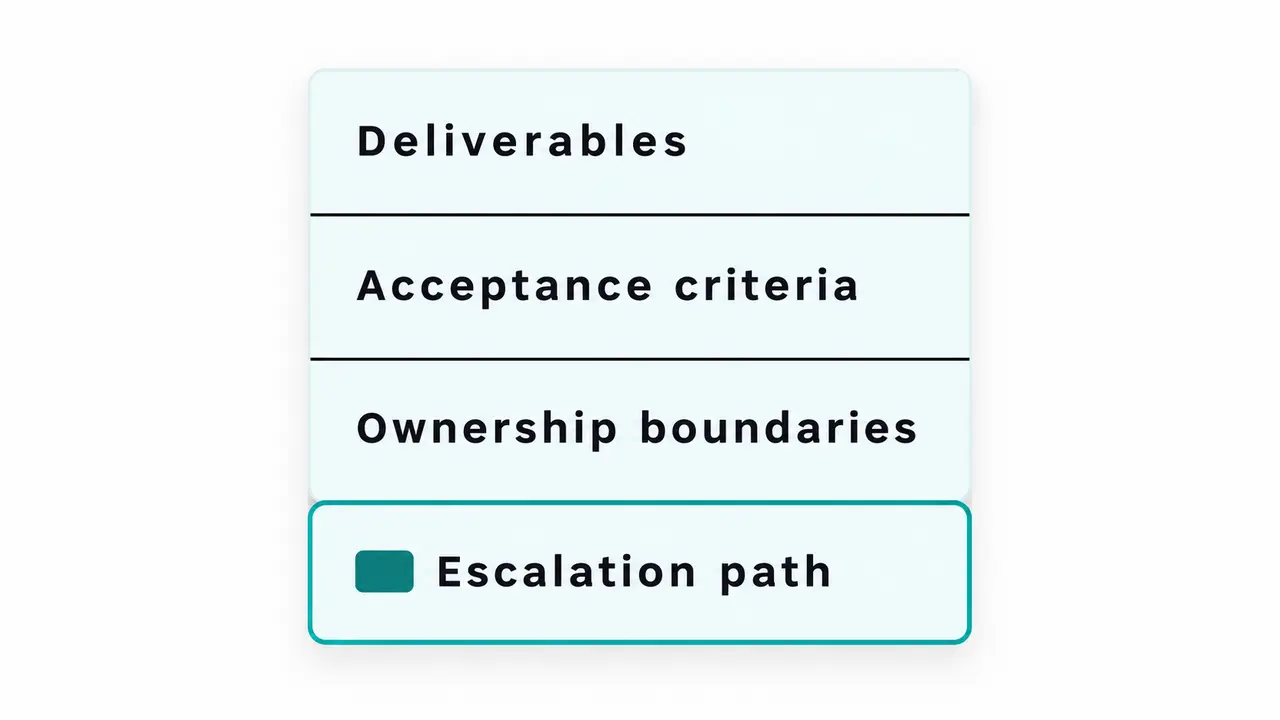
Healthy partnerships rely on written expectations that survive personnel changes. The goal is clarity on scope boundaries, quality, and handover, not legal complexity. A two-page working agreement that both sides actually follow beats a 40-page contract nobody rereads after signature.
Write down the deliverables, the acceptance criteria, the ownership boundaries, the documentation expectations, and the escalation path with names attached. Define change control in plain terms. How a scope change is proposed, who evaluates it, who approves it, and what it displaces. The point is not bureaucracy. The point is that six months in, when the product manager who wrote the original scope has left and a new one arrives with different assumptions, the document arbitrates instead of memory.
Be precise about handover, because without a clear handover expectation clients receive code they cannot maintain. Define what transferable means in your context. Runbooks, architecture notes, deployment scripts, and a walkthrough session with your engineers. Code without transfer documentation is a dependency, not an asset.
Handling scope changes without breaking sprint integrity
Scope change is normal in startups and scaleups. Markets shift, customers demand things, a competitor ships first. The failure mode is not change itself. It is letting change enter the sprint silently, which destroys predictability and, with it, trust between the teams.
Use a single intake path for changes, no exceptions for executives, and apply one rule. A change trades off against something else already in the sprint. Make the tradeoff explicit by tagging work as feature, tech debt, risk reduction, or incident-driven, so when a new feature lands, everyone can see exactly what moved to make room for it.
Treating every new request as an emergency leads to burnout and sloppy work, and the partner absorbs the cost first and quietly. Protect the current sprint with a short “next sprint buffer,” one or two items of capacity reserved for genuinely urgent work. The buffer absorbs the urgency. The sprint keeps its shape.
Comparing the three engagement models
Not every partner model fits every stage of company, and choosing wrong is expensive in a way no contract clause fixes. Compare models on ownership, continuity, and how much context the external team can realistically hold over a year, not on headline rate.
The context matters because the talent market keeps tightening. Eurostat reports that the number of ICT specialists in the EU grew by 4.5% between 2023 and 2024, and demand for engineering capacity keeps rising faster than local hiring can absorb, which is why external partnerships are structural rather than a stopgap for most scaleups.
| Dimension | Staff augmentation | Embedded team | Full project outsourcing |
|---|---|---|---|
| Integration into your rituals | Partial, individual by individual | Full, team-level from week one | Minimal, separate process |
| Ability to own outcomes | Low, ticket-scoped | High, outcome-scoped | Medium, deliverable-scoped |
| Knowledge retention | Fragile, tied to individuals | Strong, held by the team | Low, retained by the vendor |
| Drain on your management bandwidth | High | Low | Low initially, high at handover |
The verdict is straightforward. For startups and scaleups building core product, full project outsourcing is the weakest fit, because it optimizes for delivery completion over long-term ownership and iteration speed. You ship version one and then rediscover everything the vendor learned. Embedded teams align best with scaling smart with boutique partnerships, where a small team holds deep context and compounds it over time.
Why staff augmentation breaks down on complex systems
Staff augmentation works for narrow, well-bounded skill gaps. A three-month React migration with a clear spec, or an extra pair of hands on an isolated service. It breaks down on complex systems, and the reason is structural rather than a matter of talent. Context and ownership stay fragmented across individuals who never accumulate enough of either.
In the augmentation model, each person optimizes for their assigned tickets. Cross-service behavior ends up unowned, because it spans three tickets held by three people who never talk. Operational reliability is unowned for the same reason. Interface decisions and test strategy require cohesive ownership that individual assignments cannot produce, no matter how good the individuals are.
The verdict is clear. Staff augmentation is weaker than an embedded team whenever the work spans multiple components and requires sustained product context. Complex systems need dedicated engineering teams rather than isolated individuals, because the unit that holds context has to be a team, not a person.
Embedded teams work when the partner can own outcomes
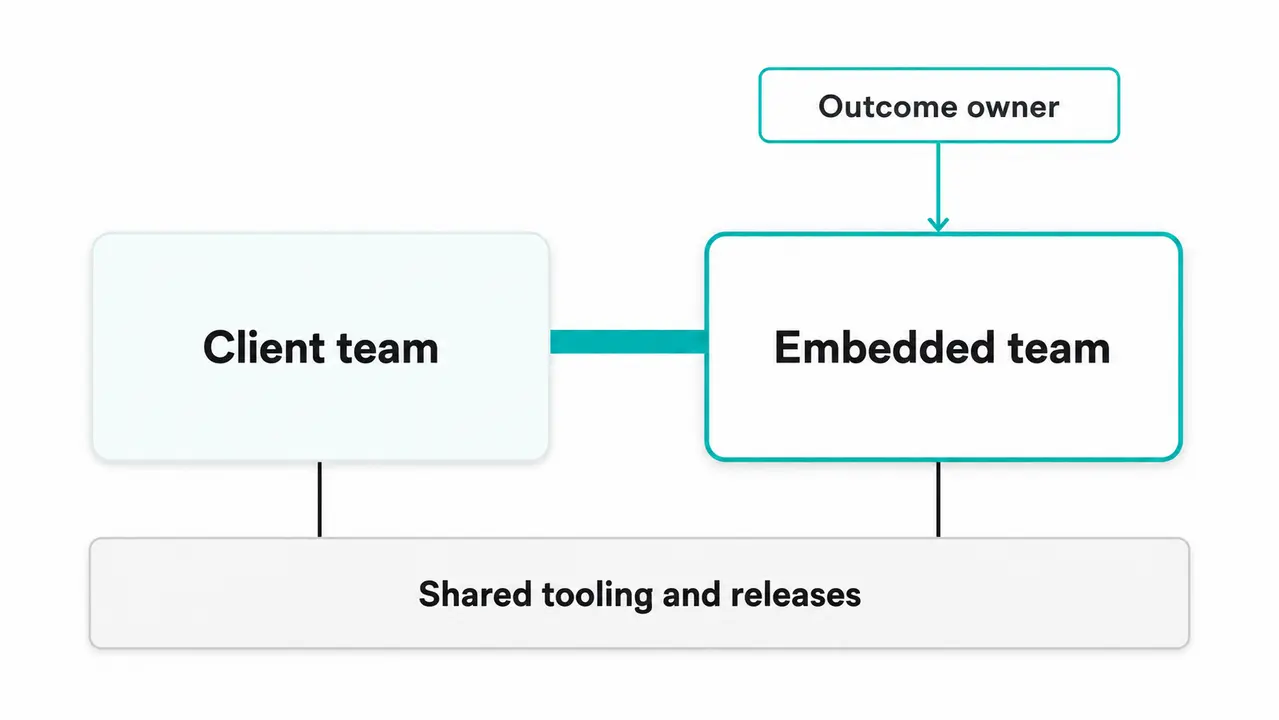
An embedded team model works when the external team is treated as part of your engineering organization, with clear boundaries and real responsibility for results. Treated as a vendor, an embedded team underperforms. Treated as a team, it compounds.
The model fits a bounded product area, a subsystem, a platform capability, or a migration stream with measurable milestones. It requires shared tooling, shared standards, shared release processes, and a DRI structure that includes the external lead. When those conditions hold, the verdict favors embedding over augmentation on continuity, quality, and management overhead, and the gap widens every quarter as context accumulates.
At Sentice, we have run embedded teams this way since 2013, and we believe they provide the highest value when the partner can own an outcome end to end rather than a queue of tickets. The mechanism is simple. When engineers sit together, follow the same practices, and answer for the same production systems, the boundary between “our team” and “their team” stops being where quality leaks out.
Vendor relationship health shows up in measurable signals
You can measure partnership health without reducing it to vanity metrics. Story points and hours logged tell you almost nothing. The signals that matter reflect flow, quality, and operational outcomes, and together they give you an honest read on the state of the vendor relationship long before it becomes a crisis.
Monitor flow with cycle time from ticket ready to deployed, pull request wait time, and rework rate. Monitor quality with escaped defects, incident frequency tied to recent changes, and test coverage on critical modules specifically, not the repo-wide average, which hides the modules that matter. Then watch the collaboration layer, because ignoring it hides systemic issues. Track decision turnaround time, blocked days per sprint, and whether the working agreement from week two still holds or has eroded one exception at a time.
A lightweight monthly review
Thirty minutes, a one-page dashboard, and a short list of decisions and risks. That is the entire ceremony. Anything heavier and leadership stops attending, and a review nobody attends measures nothing. Anything lighter and drift goes unnoticed for a quarter.
Frequently asked questions
Who should be the day-to-day owner on our side?
A single engineering DRI with the authority to unblock work and align priorities, backed by a product DRI for scope decisions. Two names, not a committee. If day-to-day ownership is distributed across several people, the partner spends its time figuring out who to ask instead of shipping.
What should we expect by the end of the first month?
At minimum, one end-to-end shipped slice that reached production, a stable CI pipeline the partner can fix without help, a documented dev setup that works on a clean machine, and a predictable release path. If none of these exist by day 30, the problem is usually onboarding friction on your side, and you should treat it as urgent.
How do we avoid vendor lock-in without slowing delivery?
Keep every architecture decision recorded in ADRs your team can read, insist on documentation and runbooks as part of the definition of done, and maintain shared access to repos, pipelines, and infrastructure-as-code from day one. Lock-in comes from undocumented context, not from contracts. Context that is written down is context you can take with you.
How do we handle time zone overlap?
Protect a small daily overlap window, two to three hours is usually enough, and reserve it for decisions and unblocking. Everything else runs async. Status updates, code reviews, and written questions carry explicit SLAs so that async does not silently become slow. Teams that try to force full overlap burn out their leads in both zones.
What is the clearest red flag in a partnership?
Progress reported as activity rather than shipped, testable outcomes in your environment. Hours logged, tickets moved, meetings held, decks produced. If you cannot click it in staging, it did not happen yet, and a partner that consistently reports effort instead of behavior is either hiding something or does not know the difference.
The next step is a working session with real artifacts
Run a 60 to 90 minute working session before signing anything. Use your real system map, one current backlog slice, and one recent incident or bug. Leave with a draft definition of done, an ownership split, and a two-week onboarding plan. If the partner cannot engage at that level of specificity, the collaboration will stay shallow no matter what the contract promises.
Bring your system map, we’ll bring the working session
Tell us about your roadmap and we’ll run the session against your real backlog slice, your definition of done, and your ownership split, before anything is signed.
About Sentice

Sentice is a boutique software engineering partner founded in 2013 by Roni Levi and Martin Petkovic, now headquartered in Skopje, North Macedonia. Rather than supplying individual developers, we build embedded teams that blend with a client’s culture, tech stack and goals, working together from a single office under our own technical leadership. We deliver dedicated software engineering teams, end-to-end software solutions, product development, and system and embedded engineering, and we act as technical advisors across the full development lifecycle, from specification and architecture through development, testing and support. We use AI coding tools across every project, and we help clients integrate AI into their own products through chatbots, MCP services, connected application layers and workflow automation. Some of the clients we started with more than a decade ago are still building with us today.